Swastik Spices Dealership in India 2026: Investment, Profit Margin & Complete Business Guide
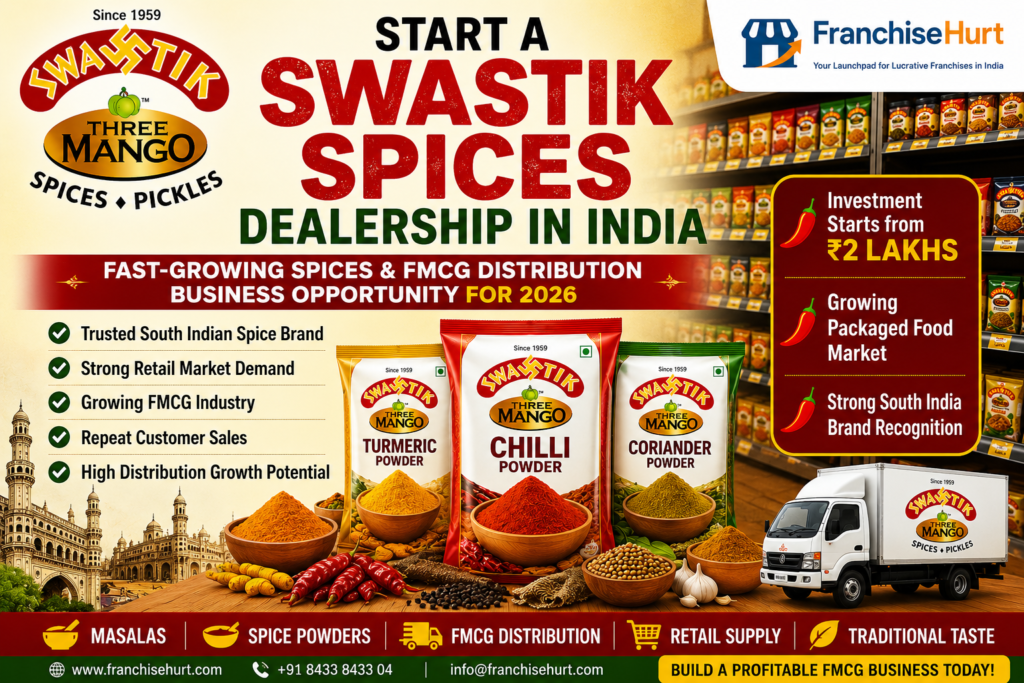
India’s packaged spices and masala industry is one of the fastest-growing segments in the FMCG sector. With increasing demand for hygienic, branded, and ready-to-use spice products, spice dealership businesses are becoming highly profitable opportunities across India.
Swastik Spices is one of the well-known spice brands in South India, especially popular in Telangana and Andhra Pradesh markets. The company is widely recognized for its famous “Three Mango Chilli Powder,” which has become a trusted household name in Telugu-speaking regions.
With rising retail demand, supermarket expansion, increasing online grocery sales, and growing preference for packaged food products, many entrepreneurs are now exploring Swastik Spices dealership opportunities in India.
This detailed guide covers:
- Swastik Spices dealership investment
- Profit margin
- Founder & company history
- FMCG market research insights
- Future outlook
- Application process
- FAQs
Quick Overview – Swastik Spices Dealership
| Category | Details |
|---|---|
| Business Type | Spices & FMCG Dealership |
| Brand | Swastik Spices |
| Industry | FMCG & Food Products |
| Investment Range | ₹2 Lakhs – ₹15 Lakhs |
| Profit Margin | 8% – 25% |
| Product Category | Masalas, Spices & Food Products |
| Best Markets | Retail stores, supermarkets, wholesalers |
| Future Growth | High |
Table of Contents
About Swastik Spices
Swastik Spices is a Hyderabad-based spices and masala company with a long-standing presence in the South Indian FMCG market.
The company originally started as Swastik Mirch Store in 1958 at Begum Bazar, Hyderabad. Over the decades, the brand became highly recognized for its packaged chilli powders, masalas, and traditional spice products.
The company is especially famous for:
- Three Mango Chilli Powder
- Traditional Telugu spice blends
- Pickle masala products
- Packaged spice powders
Today, the business operates under entities such as:
- Swastik Mirch Store Private Limited
with:
- Vijay Kumar Shah
- Rachit Vijay Shah
serving as directors.
Founder, Leadership & Company Background
The current Managing Director (MD) and CEO of Swastik Spices is Rachit Shah.
Professional Profile:
Rachit Shah LinkedIn
Under his leadership, the company expanded significantly into:
- Rural FMCG markets
- Telangana retail markets
- Andhra Pradesh distribution networks
- Karnataka distribution channels
He also helped modernize the brand for contemporary consumers while maintaining its traditional spice identity.
Also Read: Ather Energy Dealership
Why Swastik Spices Became Popular in South India
First Brand to Introduce Packaged Spice Powders
Swastik Spices is recognized as one of the first companies to introduce packaged spice powders in South India.
This helped build strong trust among households looking for:
- Hygienic spices
- Consistent quality
- Traditional taste
- Ready-to-use cooking products
Three Mango Chilli Powder Popularity
The company’s famous:
Three Mango Chilli Powder
became highly popular in Telugu-speaking households, especially for:
- Avakaya pickle preparation
- Traditional Andhra cooking
- Homemade masala recipes
This strong regional identity helped the brand build loyal repeat customers.
Why Spices & FMCG Distribution Business is Growing in India
India’s packaged food and FMCG sector continues expanding rapidly because of changing consumer preferences and retail growth.
Growing Demand for Branded Food Products
Consumers increasingly prefer:
- Packaged masalas
- Hygienic food products
- Trusted FMCG brands
- Ready-to-use spice products
This creates strong long-term demand for branded spice companies.
Expansion of Retail & Supermarkets
Modern retail stores and supermarket chains are increasing the demand for packaged spice products across India.
Increasing Online Grocery Sales
E-commerce grocery platforms are boosting sales for:
- Masalas
- Packaged spices
- Regional food brands
- Cooking ingredients
Research Insights & Market Data
India is one of the world’s largest spice-producing and spice-consuming countries. The Indian FMCG and packaged food sector continues witnessing strong growth due to rising urbanization, retail expansion, and increasing branded food consumption.
Key Industry Insights
- India is one of the world’s largest exporters of spices and spice products.
- The Indian packaged food market is expected to continue growing strongly over the coming years.
- Branded masalas are becoming increasingly popular in urban and semi-urban markets.
- Regional spice blends are witnessing rising demand across South India.
- Online grocery platforms are increasing visibility for packaged spice brands.
According to industry reports, India’s food processing sector is expected to witness significant expansion because of changing consumer lifestyles and growing demand for packaged products.
Useful Sources:
FMCG & Spice Industry Data Points
| Market Indicator | Industry Trend |
|---|---|
| India Spice Consumption | Among Highest Globally |
| Packaged Food Demand | Rapid Growth |
| Retail FMCG Expansion | Increasing |
| Online Grocery Sales | High Growth |
| Regional Masala Demand | Strong |
| Tier 2 FMCG Markets | Expanding Rapidly |
These trends indicate strong long-term opportunities for spice dealerships and FMCG distribution businesses.
Why Swastik Spices Dealership is a Good Business Opportunity
Everyday Consumer Demand
Spices are essential household products used daily across India, making the business:
- recession resistant
- repeat purchase driven
- high-volume
Strong Regional Brand Recognition
Swastik Spices already has strong brand recognition in:
- Telangana
- Andhra Pradesh
- Karnataka
This helps dealers build customer trust faster.
Low to Medium Investment Business
Compared to larger FMCG distributorship businesses, spice dealerships generally require moderate investment.
Multiple Sales Channels
Dealers may supply products to:
- Kirana stores
- Supermarkets
- Hotels
- Restaurants
- Catering businesses
- Wholesale markets
Why Choose Swastik Spices Over Other Brands
Swastik Spices has built strong regional recognition because of:
- Legacy since 1958
- Traditional Telugu spice identity
- Trusted Three Mango Chilli Powder
- Strong household brand recall
- Expanding rural distribution
- Consistent product quality
These factors improve long-term dealership potential and retailer confidence.
Space Requirement for Swastik Spices Dealership
| Infrastructure | Requirement |
|---|---|
| Small Warehouse | 300 – 800 sq.ft |
| Office Space | 100 – 300 sq.ft |
| Delivery Vehicle | Recommended |
| Storage Area | Dry & Hygienic |
Having proper inventory storage and distribution planning helps improve operational efficiency.
Documents Required for Swastik Spices Dealership
Generally required documents include:
- Aadhaar Card
- PAN Card
- GST Registration
- Shop Establishment License
- Address Proof
- Bank Statements
- Warehouse Details
Document requirements may vary depending on dealership territory and business scale.
Swastik Spices Dealership Investment
Investment depends on:
- Distribution territory
- Inventory quantity
- Warehouse requirement
- Delivery infrastructure
Estimated Investment Breakdown
| Expense Type | Estimated Cost |
|---|---|
| Security Deposit | ₹50,000 – ₹3 Lakhs |
| Initial Inventory | ₹1 Lakh – ₹7 Lakhs |
| Warehouse Setup | ₹50,000 – ₹2 Lakhs |
| Delivery Vehicle | ₹1 Lakh – ₹5 Lakhs |
| Marketing & Promotions | ₹50,000 – ₹2 Lakhs |
| Working Capital | ₹1 Lakh – ₹3 Lakhs |
Total Estimated Investment
₹2 Lakhs – ₹15 Lakhs
Investment may vary depending on territory size and dealership scale.
Swastik Spices Dealership Profit Margin
Profitability depends on:
- Sales volume
- Retail partnerships
- Distribution network
- Product demand
Estimated Revenue Sources
| Revenue Source | Estimated Margin |
|---|---|
| Spice Products | 8% – 20% |
| Premium Masala Products | 15% – 25% |
| Bulk Orders | Volume-Based Margins |
| Retail Supply | Recurring Revenue |
FMCG distribution businesses can generate stable recurring income through repeat customer purchases.
Products Offered by Swastik Spices
Swastik Spices may offer:
- Chilli powder
- Turmeric powder
- Coriander powder
- Garam masala
- Blended masalas
- Pickle masalas
- Regional spice products
Target customers include:
- Households
- Retail stores
- Supermarkets
- Hotels
- Restaurants
- Catering businesses
Why FMCG Distribution Business is Recession Resistant
FMCG products generally maintain stable demand even during slower economic conditions because consumers continue purchasing daily-use products.
The spices and masala sector benefits from:
- Daily household consumption
- Repeat customer purchases
- Strong retail demand
- Regular inventory movement
- Growing food consumption
This makes FMCG distribution businesses comparatively more stable than many seasonal industries.
Future Outlook for Spices Business in India
The future outlook for India’s spices industry remains very strong because packaged food consumption continues increasing rapidly.
Growing Branded Spice Demand
Consumers increasingly trust branded and hygienically packaged spice products.
Expansion in Tier 2 & Tier 3 Cities
Smaller cities are becoming major FMCG growth markets because of:
- rising income levels
- retail expansion
- growing brand awareness
Premium & Regional Masala Growth
Traditional regional spice products are becoming increasingly popular among consumers.
Online Grocery Expansion
E-commerce grocery platforms are increasing visibility and demand for packaged spices.
Organic & Premium Food Trends
Consumers are gradually showing more interest in:
- Premium masalas
- Traditional food products
- Organic spices
- Authentic regional flavors
These trends create strong long-term dealership opportunities.
Best States for Swastik Spices Distribution Business
Strong business opportunities exist in:
- Telangana
- Andhra Pradesh
- Karnataka
- Tamil Nadu
- Maharashtra
These states generally have strong retail FMCG demand and growing packaged food markets.
How to Apply for Swastik Spices Dealership
Step 1 – Contact the Company
Visit the official company website or contact the business team for dealership inquiries.
Step 2 – Submit Business Details
Provide:
- Business information
- Distribution experience
- Investment capability
- Location details
Step 3 – Company Evaluation
The company may evaluate:
- Territory demand
- Distribution capability
- Market potential
Step 4 – Dealership Setup
After approval:
- Inventory setup
- Distribution planning
- Retail onboarding
- Territory activation
Best Markets for Spices Distribution Business
Strong demand exists in:
- Hyderabad
- Telangana markets
- Andhra Pradesh markets
- Karnataka markets
- Retail-dense cities
- Wholesale food hubs
Challenges in Spices Distribution Business
Before investing, understand these challenges:
High FMCG Competition
The packaged spice market includes multiple established brands.
Retail Network Management
Maintaining strong retailer relationships is essential.
Inventory Rotation
Food products require proper stock management and rotation.
Tips to Make Your Swastik Spices Dealership Successful
Build Strong Retail Relationships
Retail store partnerships improve recurring sales and market penetration.
Focus on Fast-Moving Products
Popular masala products generally generate faster cash flow.
Expand Local Distribution
Increasing retail coverage improves sales volume and brand visibility.
Use Local Marketing
Promote products using:
- Retail branding
- Local advertising
- WhatsApp marketing
- Food business networks
Should You Start a Swastik Spices Dealership?
If you are looking for:
- stable FMCG demand
- repeat customer sales
- moderate investment
- scalable distribution business
- growing packaged food market
then Swastik Spices dealership can be a strong long-term business opportunity in India’s expanding FMCG sector.
Is Swastik Spices Dealership Profitable in 2026?
Yes, spices and FMCG distribution businesses have strong long-term potential because:
- Household demand remains stable
- Packaged food consumption is increasing
- Retail markets continue expanding
- Repeat customer purchases generate recurring revenue
Entrepreneurs who build strong retail networks and efficient distribution systems can create scalable businesses.
Final Verdict
Swastik Spices operates in one of India’s most stable and high-demand FMCG sectors — packaged spices and masala products.
With increasing branded food consumption, expanding retail markets, growing online grocery demand, and strong regional brand recognition, Swastik Spices dealership opportunities offer solid long-term business potential.
Entrepreneurs who:
- Build strong retail relationships
- Focus on fast-moving products
- Expand local distribution networks
- Maintain consistent supply
can build profitable and scalable FMCG distribution businesses.
Explore Other FMCG Dealerships
Frequently Asked Questions (FAQs)
1. How much investment is required for Swastik Spices dealership?
Ans: Estimated investment may range between ₹2 Lakhs and ₹15 Lakhs depending on territory size and inventory.
2. Who is the CEO of Swastik Spices?
Ans: The current Managing Director and CEO of Swastik Spices is Rachit Shah.
3. What is Swastik Spices famous for?
Ans: The company is especially famous for its “Three Mango Chilli Powder” used widely in Telugu households and Avakaya pickle preparation.
4. Is spices distribution business profitable in India?
Ans: Yes, the spices and FMCG sector is considered one of India’s strongest recurring-demand business industries.
5. Who are the target customers for spice dealerships?
Ans: Customers may include:
Retail stores
Supermarkets
Hotels
Restaurants
Catering businesses
Households