Health Food Franchises in 2026: Powerful Trends Rewriting the Restaurant Industry
Health food franchises have shed their old image of small, niche offerings, evolving into powerful leaders redefining the restaurant landscape. In 2026, these wellness-oriented brands are outpacing traditional fast-food restaurants, expanding their market share at unprecedented rates, and solidifying healthy dining as the new benchmark for success.
Quick Overview
| Category | Details |
|---|---|
| Industry | Health Food Franchises |
| Market Size (2025) | $23.6 Billion |
| Projected Market Size (2034) | $48.9 Billion |
| CAGR (2026–2034) | 8.4% |
| Fast-Casual Market Size | $84.1 Billion |
| Key Growth Drivers | Wellness, Healthspan, Plant-Based Diets, Clean Label Foods |
| Fastest Growing Segment | Fast-Casual Health Dining |
| Top Consumer Demand | Fiber-Rich, High-Protein, Nutrient-Dense Meals |
| Emerging Technologies | AI Personalization, Smart Packaging, Wearable Integration |
| Best Franchise Categories | Healthy Cafes, Vegan Franchises, Organic Cafes, Supplement Stores |
| Investor Outlook | Strong Long-Term Growth Potential |
The Numbers Don’t Lie: Exploding Market Growth
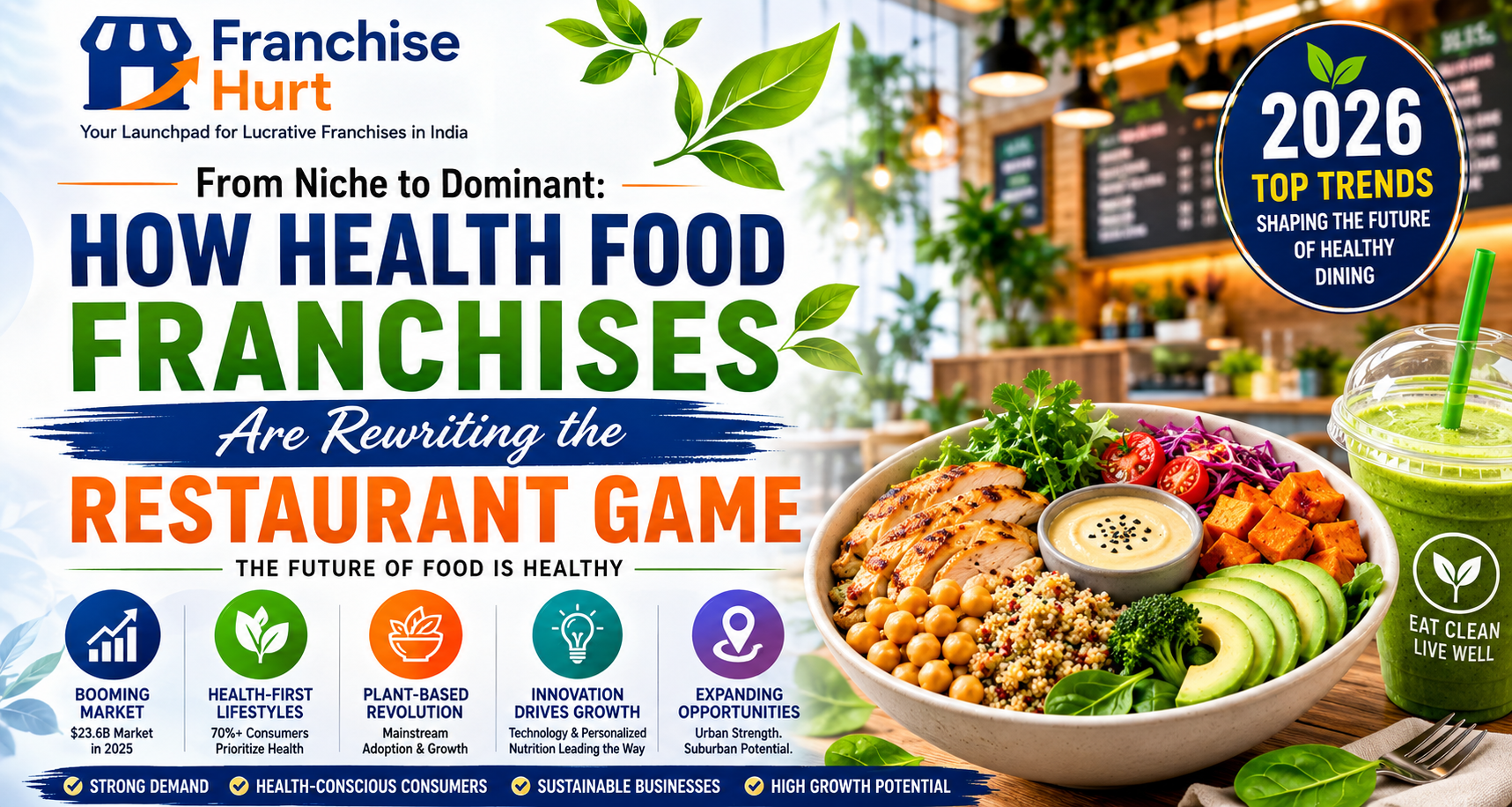
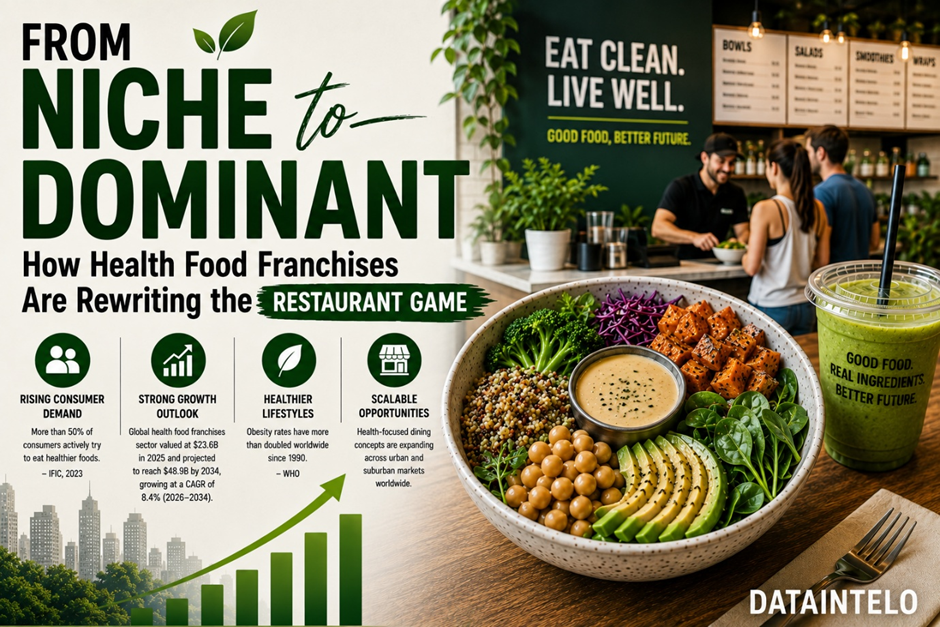
The global health food franchise market reached an impressive $23.6 billion in 2025 and is projected to skyrocket to $48.9 billion by 2034, boasting a substantial compound annual growth rate (CAGR) of 8.4%between 2026 and 2034. This phenomenal growth is fueled by the escalating demand for healthy, convenient, and ethically sourced food options in both urban centers and suburban neighborhoods worldwide.
This is no arbitrary growth. It reflects a fundamental paradigm shift in consumer attitudes towards food. An 8.4% annual growth rate signifies the market will essentially double within a decade, positioning health food franchises as a highly lucrative investment within the restaurant sector. Urban centers, with their dense populations, elevated disposable income, and heightened awareness of well-being, provide ideal environments for health-conscious establishments. Suburban locales are catching up rapidly as families seek healthier alternatives to processed fast food for their children.
Health food franchises have long transcended their niche beginnings, now outperforming many conventional quick-service chains. This transition is primarily a response to the evolution of consumer priorities. As consumers become increasingly informed about nutrition, gut health, and holistic well-being, they are actively seeking out dining options that align with their lifestyle values. The fast-casual segment, which seamlessly blends the speed of fast food with the quality of casual dining, has emerged as the fastest-growing category, largely propelled by these health trends in 2026.
Evidence of this dominance is abundant. Fast-casual dining is poised to reach $84.1 billion in sales by 2025, and health food franchises are driving a significant portion of this expansion. The industry is abuzz with descriptions like “massive healthy food franchise revolution,” referencing the market’s vast size and unstoppable momentum.
Research Insights
Market Growth is Accelerating
The global health food franchise market reached $23.6 billion in 2025 and is projected to grow to $48.9 billion by 2034, reflecting strong long-term demand and an estimated CAGR of 8.4%.
Consumers Are Prioritizing Wellness
More than 70% of consumers believe healthy menu options are essential, creating significant opportunities for franchises that focus on nutrition, transparency, and wellness-oriented dining experiences.
Fast-Casual Health Dining Leads the Market
Fast-casual restaurants are becoming the preferred format for health-conscious consumers, with the segment expected to generate approximately $84.1 billion in sales.
Plant-Based Eating Is Mainstream
A growing number of consumers are reducing meat consumption, while vegetarian and vegan lifestyles continue gaining popularity worldwide. This trend is creating sustained demand for plant-based franchise concepts.
Technology Is Reshaping Food Franchising
Health-focused brands are increasingly investing in:
- AI-powered nutrition recommendations
- Mobile ordering systems
- Personalized meal planning
- Smart packaging solutions
- Wearable health integrations
These innovations improve customer engagement and retention.
Urban and Suburban Markets Are Driving Expansion
Urban centers remain the primary growth engine for health food franchises, while suburban communities are emerging as major expansion opportunities due to growing demand for nutritious and convenient dining options.
Also Read: India Sweet House Franchise
Why Consumers Are Opting for Health Over Tradition
Wellness as Identity
Modern consumers no longer simply eat to survive; they eat to live, to express their values, and to articulate their identity. Wellness is intrinsically linked to how individuals perceive themselves, what they stand for, and their aspirations for the future. In fact, over 70% of consumers feel healthy menu options are non-negotiable, yet a mere 48% of restaurant owners are equipped to offer them at an affordable price. This gap has been a golden opportunity for health food franchises.
The increasing health consciousness is spurred by the pervasive influence of social media, the implementation of government health initiatives, and a growing understanding of food’s impact on long-term vitality. Younger generations, Millennials and Gen Z, embrace a holistic, lifelong approach to health and well-being, investing in nutrition, exercise, and mental wellness from an early age. This demographic shift has cultivated a sustained demand for nutrient-dense meals that seamlessly integrate into their lifestyle.
The Rise of Healthspan
The focus has shifted from merely prolonging life to maximizing quality of life, a concept referred to by experts as “healthspan.” Consumers are moving beyond the question of, “Will this food keep me alive?” and asking, “Will this food energize me, strengthen me, and keep me sharp today and for years to come?”
This burgeoning focus on healthspan fuels the demand for fiber-rich, low-glycemic meals that provide sustained energy without subsequent crashes. Leading retailers identify fiber as a top trend for 2026, driven by consumers who prioritize gut health and enduring energy. Consequently, top-tier franchises are emphasizing nutrient-packed, high-protein options that utilize nutrient-dense supergreens as a base instead of refined carbohydrates.
Rapid Evolution of Dietary Habits
Vegetarian and vegan diets have transcended their status as fringe options to become mainstream. It’s estimated that a quarter of all consumers will adhere to a vegetarian or vegan lifestyle by 2025, with an already substantial one in three having transitioned to meat-free eating or significantly reduced their meat consumption. This evolution has generated a lasting appetite for plant-based and organic fare across all types of food franchises.
The advent of GLP-1 weight-loss drugs presents both challenges and opportunities for food franchises. Individuals taking these medications are actively seeking products that support satiety, provide balanced nutrition, and promote metabolic health – creating a new and significant customer segment that health food franchises are ideally positioned to serve.
Key Factors Driving Health Food Franchise Success in 2026
The leading food franchises to invest in for 2026 meet seven crucial criteria:
| Criterion | Why It Matters |
| Alignment with health trends | Fiber-rich, low-glycemic, nutrient-dense meals drive success |
| Nutritional strength | High-protein, supergreen options with sustained energy |
| Lean footprint | Efficient labor and operational models |
| Simple labor model | Easy staff training and consistent execution |
| Diversified revenue | Multiple income streams beyond dine-in |
| Open territories | Available markets for expansion |
| Clear market validation | Proven customer demand and retention |
Health-focused food franchises provide nourishing, customizable, and lifestyle-aligned dining experiences that cater to the demands of today’s consumers.
Clean Label is Now the Expectation
The era of “clean label” food has transitioned from a niche trend to an industry standard, dictating product development, regulatory compliance, and brand strategy. Consumers are increasingly discerning about the provenance of their food and the ingredients within it, leading health food franchises to offer granular detail on preparation methods, ingredient sourcing, additions, and nutritional values.
Regulators are increasingly scrutinizing ultra-processed foods, potentially mandating front-of-pack labeling and enhancing packaging safety regulations. Businesses that effectively integrate clean-label practices, transparent communication, and scientifically substantiated claims will lead the market.
Technological Integration and Personalization
The pursuit of personalized dining experiences is a primary goal for the industry, with advancements in AI, wearable technology, and mobile applications driving innovative smart packaging, automatic replenishment systems, and tailored health-centric recommendations. Holistic wellness is poised to accelerate, driven by personalized nutrition plans, data-driven health insights, and interconnected lifestyle solutions.
Physical, mental, and metabolic health are expected to converge, leading to new multi-benefit products and AI-powered recommendations informed by wearable data. Health food franchises are evolving beyond mere food vendors to become trusted partners in their customers’ overall well-being journeys.
Geographic Expansion: The Urban and Suburban Nexus of Growth
While the 8.4% annual growth rate is impressive, it’s not distributed uniformly. **Urban centers** are the principal drivers of this expansion, benefiting from concentrated populations, higher purchasing power, and a strong inclination towards health-conscious living. Urban metropolises across North America, Europe, and Asia are witnessing a rapid influx of health food franchise openings, often supplanting traditional fast-food establishments.
Suburban markets represent the next significant wave of growth. As urban dwellers seek alternative lifestyles, families migrating to suburban areas are increasingly seeking convenient, nutritious options for their children, moving away from processed fast-food fare. Health food franchises in these suburban locales are experiencing double-digit growth, fueled by parents’ growing emphasis on ingredient transparency and nutritional value. This suburban boom is crucial to the market’s trajectory from $23.6 billion to $48.9 billion by 2034.
Emerging markets in Latin America, Southeast Asia, and the Middle East are also rapidly embracing health food franchises. As these urban centers mature and per capita income rises, demand for nutritious and convenient food follows a predictable path, mirroring the trajectory observed in developed markets over the past decade.
The Spectrum of Health Food Franchise Opportunities
Fast-Casual Health Dining
The fast-casual segment is experiencing the most explosive growth, with health trends playing a pivotal role in 2026 success. These franchises offer high-protein, nutrient-dense meals with the speed and convenience demanded by health-conscious consumers. Top performers demonstrate the ability of fiber-rich meals to cultivate unwavering customer loyalty.
Plant-Based and Vegan Franchises
The mainstream adoption of vegetarian and vegan diets has propelled plant-based franchises to the forefront of the industry. These establishments cater to a burgeoning clientele of individuals reducing their meat consumption and the projected quarter of consumers who will embrace a vegetarian or vegan diet by 2025.
Organic and Superfood Cafes
Cafes focusing on supergreens, organic produce, and vitamin- or iron-fortified ingredients are successfully capturing the health and wellness market. These franchises differentiate themselves by offering added nutritional value through carefully crafted recipes and specialized preparation methods.
Health Store and Supplement Franchises
The health store and supplement franchise industry is a robust sector, generating an estimated $12 billion annually. These outlets offer a comprehensive range of products, including vitamins, minerals, supplements, protein powders, weight-management solutions, aromatherapy items, herbs, superfoods, and natural beauty products.
Sandwich and Healthy On-The-Go Options
Sandwich franchises have a long-standing presence within the health food franchising ecosystem, having historically been perceived as a healthier alternative to other fast-food choices.
Advantages of Investing in a Health Food Franchise
Soaring Market Demand
Health food franchises operate within a vast and expanding market with a consistently high demand for healthier, meat-free, and sustainably sourced alternatives. These franchises are transforming the culinary landscape by delivering nutritious, delicious, and convenient dining experiences that meet the needs of health-aware consumers, a demand that is continuously growing as the emphasis on personal well-being intensifies.
Alignment with Enduring Trends
Health-focused food franchises excel over traditional quick-service counterparts because they capitalize on established and enduring health trends rather than fleeting fads. The projected growth to $48.9 billion by 2034 underscores that this is a trajectory of sustainable development, not a temporary spike.
Diverse Revenue Streams
Top health food franchises have successfully developed multiple revenue avenues, encompassing dine-in, delivery, catering services, and the sale of branded retail products. Advancements in food delivery technology have further expanded the reach and convenience offered by these businesses.
Brand Transparency as a Competitive Edge
By openly sharing detailed nutritional information and the origins of their ingredients, health food franchises build trust and loyalty with a growing consumer base that prioritizes transparency. This transparent approach serves as a powerful differentiator in a market where consumers are increasingly invested in understanding the provenance and composition of their food.
Challenges Facing Health Food Franchises
Escalating Ingredient Costs
The use of organic and nutrient-rich ingredients often comes with higher associated costs than traditional alternatives, necessitating astute pricing strategies to maintain affordability while covering expenses. The industry must strike a balance between quality and cost, especially in light of increasing demand for private-label options and innovative products.
Increased Regulatory Scrutiny
Heightened regulatory attention on ultra-processed foods, including potential mandatory front-of-pack labeling and stricter packaging guidelines, demands that franchises remain adaptable and compliant with evolving regulations. Businesses that effectively blend clean-label innovations, clear communication, and scientifically grounded claims will find greater success.
The Imperative of Consumer Education
Health food franchises bear the responsibility of educating consumers about the benefits of fiber-rich, low-glycemic meals and the importance of nutrient-dense options. This requires significant investment in marketing and staff training to effectively convey the value proposition.
Competition from Traditional Restaurants
As 48% of restaurant owners begin to incorporate healthy, affordable dishes into their menus, they pose increasing competition to health food franchises. This shift signals a need for differentiation and continued innovation within the health-focused sector.
The Erosion of Traditional Restaurant Dominance
Traditional fast-food establishments have largely failed to adapt to the demands of health-conscious consumers. Their menus remain overwhelmingly rich in processed ingredients and carbohydrates, lacking in nutritional transparency. Many outlets provide basic information regarding the source of meat, but neglect to detail preparation methods, calorie counts, or the full ingredient roster.
The stark reality is that over 70% of consumers believe healthy menu options should not be overlooked, yet only 48% of restaurant owners offer such choices affordably. This significant gap is the opening through which health food franchises are rapidly advancing, luring customers away from traditional chains in favor of establishments that champion nutrition, transparency, and lifestyle integration.
Navigating Your Health Food Franchise Choice
Validate Market Demand
Opt for franchises with a demonstrable track record of real customer demand, robust retention rates, and sound financial performance. Steer clear of concepts that exist solely on paper and haven’t undergone rigorous market testing.
Prioritize Operational Simplicity
Select franchises that feature uncomplicated labor models and lean operational structures. Streamlined staff training and consistent execution are paramount for ensuring quality and profitability across multiple locations.
Confirm Territory Availability
Before committing, verify that desirable territories within your chosen market are available. Some franchises may have territorial restrictions or saturation in certain areas.
Scrutinize the Nutritional Philosophy
The franchise’s nutritional approach should align with contemporary trends in 2026, focusing on fiber-rich, low-glycemic, nutrient-dense, and high-protein options utilizing supergreens. Carefully examine the menu to ensure it delivers on these principles.
Seek Diversified Revenue Opportunities
Look for franchises that offer multiple income streams beyond dine-in operations, including delivery, catering, and branded retail products.
The Future: Trajectories for Health Food Franchises
A Shift Towards Holistic Wellbeing Integration
The concept of holistic wellness will gain further traction, with physical, mental, and metabolic health merging to create multi-benefit products and interconnected lifestyle solutions. Health food franchises will evolve into multifaceted wellness partners rather than purely culinary providers.
AI-Powered Personalization for Enhanced Health
AI will enable predictive health management through personalized recommendations based on wearable data. While advancements in smart packaging and automatic replenishment will drive further personalization, challenges related to data integration and regulatory compliance will need to be addressed.
Menu Development Centered on Healthspan
Future menu innovation will prioritize healthspan-daily vitality and functionality-over solely focusing on longevity. This will involve emphasizing foods that support metabolic health, mitigate stress, and promote sustained energy levels.
Clean Label as the New Norm
The “clean label” standard will become universally accepted, influencing product development, regulatory frameworks, and brand strategies across the health food franchise sector. Transparency regarding processing methods and nutritional quality will be paramount.
Conclusion: Redefining Restaurant Success
Health food franchises have revolutionized the restaurant industry by demonstrating that profitability and nutrition are not mutually exclusive but rather symbiotic elements of success. In 2026, these brands have achieved market dominance by successfully aligning with profound consumer shifts, including the ascendancy of the “healthspan” mentality, heightened demands for transparency, the growing popularity of plant-based diets, and the integration of technology and wellness.
The impressive market expansion from $23.6 billion in 2025 to an anticipated $48.9 billion by 2034, with an 8.4% CAGR, underscores that this is not mere speculation; it is a demonstrable trend of exponential growth driven by surging demand for healthy, convenient, and sustainable food across urban and suburban markets globally. This trend firmly establishes health food franchises as one of the premier investment opportunities within the restaurant sector for the coming decade.
Explore Franchise Business opportunities
Frequently Asked Questions (FAQs)
1. What is a health food franchise?
Ans: A health food franchise is a food-service business that specializes in nutritious and wellness-focused products such as salads, protein bowls, smoothies, organic meals, plant-based foods, supplements, and functional beverages. These businesses cater to consumers seeking healthier alternatives to traditional fast food.
2. Are health food franchises profitable?
Ans: Health food franchises can be highly profitable due to increasing consumer demand for healthy dining options, premium pricing opportunities, strong customer loyalty, and multiple revenue streams such as dine-in, delivery, catering, and retail product sales.
3. Why are health food franchises growing so quickly?
Ans: Growth is being driven by rising health awareness, wellness-focused lifestyles, increased demand for clean-label foods, growing adoption of plant-based diets, and consumers seeking nutritious alternatives to conventional fast-food options.
4. Which health food franchise segment is growing the fastest?
Ans: Fast-casual health dining concepts are among the fastest-growing segments because they combine convenience, customization, nutritional value, and high-quality ingredients that appeal to modern consumers.
5. Are plant-based food franchises a good investment?
Ans: Yes. Plant-based food franchises continue to gain popularity as more consumers adopt vegetarian, vegan, and flexitarian lifestyles. This trend creates long-term growth opportunities for franchise investors.
6. What should investors look for before buying a health food franchise?
Ans: Investors should evaluate several factors, including market demand, franchise support, brand reputation, operational simplicity, revenue diversification, territory availability, customer retention rates, and long-term industry trends.
7. How is technology influencing health food franchises?
Ans: Technology is helping health food franchises improve customer experiences through AI-powered nutrition recommendations, mobile ordering systems, personalized meal planning, loyalty programs, wearable health integrations, and data-driven marketing strategies.
8. What challenges do health food franchises face?
Ans: Common challenges include higher ingredient costs, increasing regulatory requirements, customer education efforts, supply chain management, and growing competition from traditional restaurants introducing healthier menu options.
9. Why are consumers choosing health food franchises over traditional fast-food chains?
Ans: Consumers are increasingly prioritizing nutrition, ingredient transparency, sustainability, and wellness. Health food franchises align with these preferences by offering cleaner, healthier, and more customizable meal options.
10. Will health food franchises continue growing beyond 2030?
Ans: Industry forecasts suggest strong long-term growth as consumers continue prioritizing health, wellness, transparency, convenience, and sustainable food choices. The market is projected to nearly double in value by 2034.
11. Is now a good time to invest in a health food franchise?
Ans: Many industry experts consider health food franchises one of the most promising food-service investment opportunities due to strong market growth, evolving consumer preferences, and increasing demand for wellness-focused dining experiences.
12. What are the most popular types of health food franchises?
Ans: Popular categories include fast-casual healthy restaurants, plant-based franchises, vegan cafés, organic food outlets, smoothie and juice bars, superfood cafés, healthy sandwich concepts, and health supplement stores.