Best Franchise Model in 2026: Why Niche Service Businesses Are Growing

By Editor
Updated: October 2026
Finding the right franchise is not only about looking for the cheapest investment or the biggest brand name. In 2026, entrepreneurs are paying more attention to businesses that solve a specific problem, have repeat customers and can operate with a manageable cost structure.
This is where niche service franchises are becoming interesting.
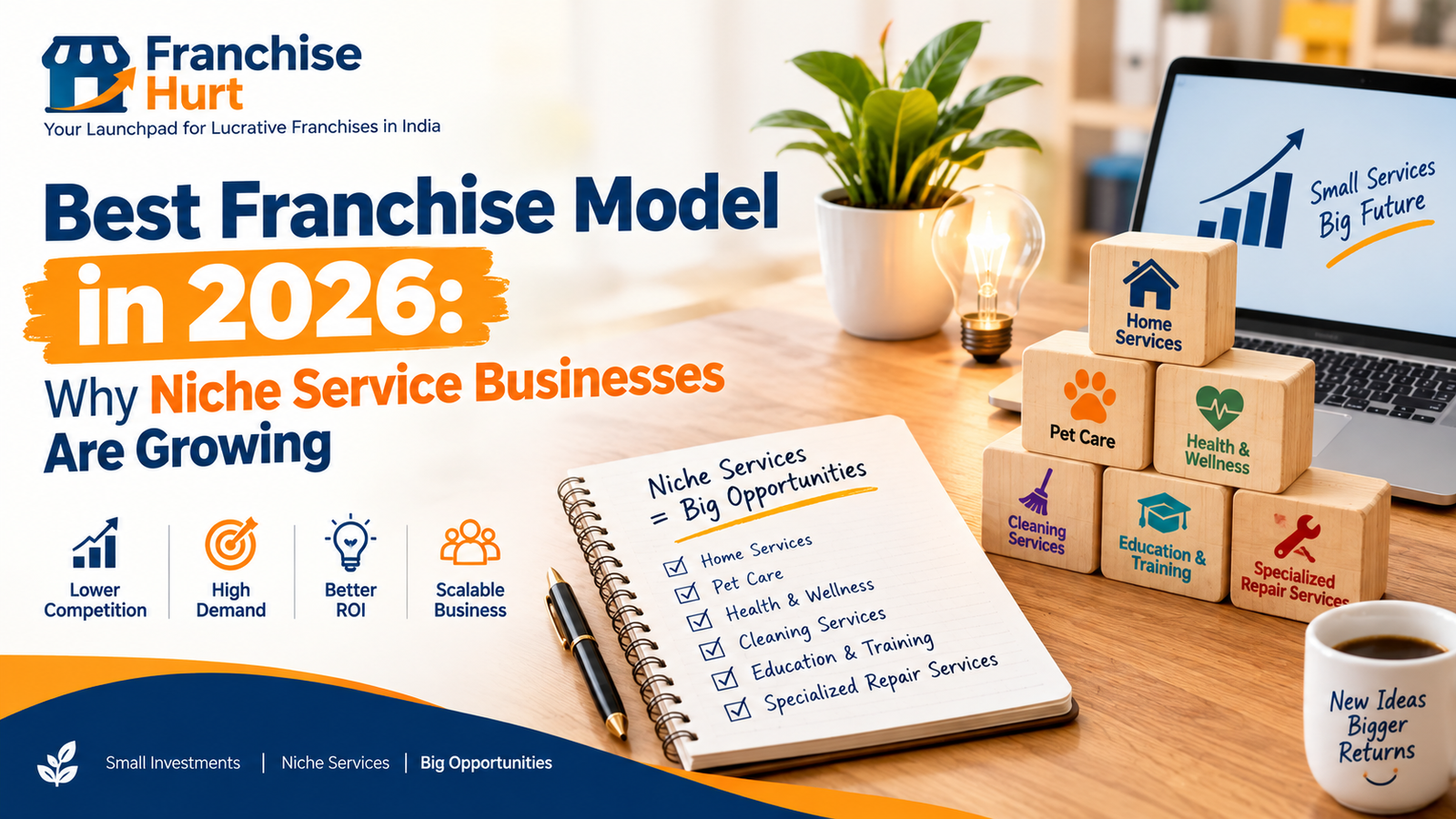
Instead of trying to serve everyone, these businesses focus on a clearly defined customer group. Examples include specialised education, pet care, wellness, home services, children’s activities, senior care, fitness, beauty and other experience-based services.
The idea is simple: serve a smaller audience better instead of trying to serve everyone.
That does not automatically make a franchise profitable. Location, pricing, competition, staffing, franchisor support and customer demand still matter. But for the right entrepreneur, a focused service model can provide an attractive way to build a repeat-customer business.
Quick Overview – Best Franchise Model
| Factor | What It Means |
|---|---|
| Business Model | Niche or specialised service |
| Main Focus | A clearly defined customer group |
| Investment | Varies by brand and business format |
| Inventory | Often lower than inventory-heavy businesses |
| Revenue | Service fees, memberships, packages or repeat purchases |
| Customer Base | Usually targeted rather than mass-market |
| Technology | CRM, online booking, payments and digital marketing |
| Growth Potential | Single outlet to multiple locations, depending on the model |
| Main Risk | Limited demand if the niche is too narrow |
Table of Contents
What Is a Niche Service Franchise?
A niche service franchise is a franchise that focuses on a specific service or customer requirement rather than offering a broad range of products.
For example, a general fitness centre serves a wide audience. A specialised fitness franchise might focus on:
- Women’s fitness
- Senior fitness
- Children’s fitness
- Sports recovery
- Personal training
The same concept can be applied to education, pets, healthcare support, home services, beauty and other categories.
The advantage is that the business can build a clear identity.
Customers know exactly what the business offers and who it is designed for.
Also Read: Sky Laban Franchise
Why Is This Model Getting Attention in 2026?
The franchise industry continues to show resilience. The International Franchise Association’s 2026 outlook projects more than 12,000 new franchised businesses during the year, with franchise economic output expected to exceed $920 billion in the United States. The report also identifies child services and commercial and residential services among the faster-growing franchise industries. International Franchise Association
That does not mean every franchise will succeed.
Instead, it shows that service-oriented franchise categories continue to attract attention as brands look for scalable formats and entrepreneurs look for structured business models.
India has its own growth story.
Retail expansion is increasingly reaching Tier II and Tier III cities, while consumer spending, digital payments and organised retail continue to develop. IBEF reports continued retail expansion in 2026 and highlights growing demand beyond India’s largest metropolitan markets. India Brand Equity Foundation
For entrepreneurs, this creates opportunities for specialised businesses that understand their local customers.
What Makes a Niche Franchise Different?
A niche franchise normally has three important characteristics.
1. A Clearly Defined Customer
Instead of targeting the entire market, the business identifies a specific audience.
For example:
Broad:
Fitness centre
Niche:
Fitness programme designed specifically for women over 40
The second business has a much clearer marketing message.
2. A Specific Problem to Solve
A good niche business should solve a problem customers are willing to pay to address.
Examples include:
- Parents looking for specialised learning
- Pet owners looking for professional grooming
- Homeowners requiring maintenance services
- Consumers looking for specialised wellness programmes
- Children looking for structured extracurricular activities
The narrower the problem, the more important it becomes to verify whether enough customers exist in the target location.
3. A Repeatable Business System
A franchise should not depend entirely on the individual owner’s personal skills.
A good franchisor should provide systems covering areas such as:
- Training
- Operations
- Marketing
- Customer management
- Branding
- Pricing guidance
- Technology
- Standard operating procedures
The franchisee still has to run the business, but the franchisor’s system can reduce the need to build everything from scratch.
Why Entrepreneurs Are Considering Niche Service Franchises
1. Customers Are Looking for More Specific Solutions
Consumers increasingly have access to many choices.
That makes positioning important.
A business that clearly communicates what it does can sometimes be easier to market than a general business with a broad and unclear offering.
For example:
“After-school coding classes for children aged 7–14”
is more specific than:
“Educational services.”
The first message immediately tells parents what the business provides.
Grow Your Franchise Business with FranchiseHurt
Reach potential franchise partners, expand your brand, and discover new business opportunities across India. Take the next step towards business growth today!
FranchiseHurt — Your Launchpad for Lucrative Franchises in India
2. Service Businesses Can Have Repeat Customers
One attractive feature of service businesses is the possibility of repeat transactions.
Depending on the category, customers may return:
- Weekly
- Monthly
- Seasonally
- Through memberships
- Through annual packages
Examples include fitness, education, pet care, beauty, home maintenance and wellness.
However, repeat revenue should never be assumed.
A franchisee should check the actual customer retention model, pricing structure and average transaction value before investing.
3. Some Models Require Less Inventory
Many service businesses do not need the same level of product inventory as traditional retail or distribution businesses.
Instead, the major expenses may include:
- Rent
- Employees
- Equipment
- Marketing
- Software
- Utilities
- Training
This can make certain service models easier to manage.
But lower inventory does not mean low investment.
A premium location, specialised equipment or trained employees can still make a service franchise expensive to operate.
Join the FranchiseHurt Community
Connect with entrepreneurs, explore franchise opportunities, exchange business ideas, and stay updated on the latest business trends across India.
Join Our Facebook Group ↗4. Digital Tools Are Changing Service Businesses
Technology is becoming part of everyday franchise operations.
A modern service franchise may use:
- Online appointment booking
- Digital payments
- CRM software
- Automated reminders
- WhatsApp communication
- Customer loyalty programmes
- Online reviews
- Social media advertising
- Performance dashboards
Technology does not replace the service.
Instead, it can make the customer journey smoother and help the owner manage operations more efficiently.
5. Local Marketing Can Be More Focused
A niche business has an advantage when it comes to defining its audience.
For example, a children’s activity franchise can target parents living within a specific radius.
A pet service business can target households with pets.
A senior fitness centre can focus its marketing on older consumers and their families.
This allows franchisees to build campaigns around a clearly defined customer rather than spending money trying to reach everyone.
6. Experience Matters More in Service Businesses
In a service business, customers are not simply buying a product.
They are also experiencing:
- Staff behaviour
- Communication
- Convenience
- Cleanliness
- Personal attention
- Waiting time
- Service quality
- Follow-up
A customer who receives consistently good service is more likely to return and recommend the business.
This is especially important for local franchises where reviews and word-of-mouth can influence new customers.
Examples of Niche Service Franchise Categories
The concept can be applied to many industries.
Education
- Coding
- Robotics
- STEM learning
- Music
- Language training
- Specialised tutoring
Health & Wellness
- Fitness
- Yoga
- Physiotherapy support
- Wellness programmes
- Recovery services
Pet Services
- Grooming
- Training
- Daycare
- Boarding
- Pet wellness
Home Services
- Cleaning
- Pest control
- Plumbing
- Electrical services
- Home maintenance
Child Services
- Activity centres
- Indoor play
- Skill development
- Sports
- Creative learning
Personal Services
- Beauty
- Salon
- Grooming
- Senior support
- Lifestyle services
Also Read: Artos Distributorship
Is a Niche Franchise Really Low Risk?
This is where entrepreneurs need to be careful.
A niche franchise should not automatically be described as a low-risk business.
Every franchise has risks.
A specialised concept can actually face a bigger problem if there are not enough potential customers in the selected area.
Before investing, check:
- Local population
- Target customer size
- Existing competitors
- Average pricing
- Customer willingness to pay
- Rent
- Staff availability
- Break-even requirements
A good franchise opportunity is not simply one with a small investment.
It is one where the business economics make sense for the location.
How Much Does a Niche Service Franchise Cost?
There is no single investment figure.
A small service franchise may operate from a compact space or even through a mobile model.
A larger centre may require:
- Commercial premises
- Interior work
- Equipment
- Multiple employees
- Technology
- Marketing
- Working capital
Therefore, instead of relying on generic figures such as “$50,000–$200,000,” entrepreneurs should calculate the actual cost of the specific franchise.
Before investing, ask for:
- Franchise fee
- Equipment cost
- Interior cost
- Technology charges
- Initial marketing fee
- Royalty
- Advertising fee
- Working capital requirement
- Renewal fee
- Expected staffing requirement
How to Evaluate the Profit Potential
Profit should be calculated from actual business assumptions rather than a headline ROI figure.
A simple evaluation should include:
Monthly Revenue
minus
Rent + Salaries + Utilities + Marketing + Royalty + Other Expenses
equals
Estimated Operating Profit
Then consider taxes, loan repayment and the owner’s salary separately.
This approach gives a more realistic picture than simply looking at a franchise’s advertised profit percentage.
How to Choose the Right Niche Franchise Models
Choose a Market You Understand
If you understand your customers, sales conversations and marketing can become easier.
You don’t necessarily need to be an expert, but you should understand the problem the business solves.
Check Local Demand
Don’t invest because a franchise is trending nationally.
Check your own city.
Search Google.
Visit competitors.
Talk to potential customers.
Look at local pricing.
This small amount of research can reveal whether there is a genuine market.
Don’t Choose a Niche That Is Too Small
Specialisation is useful, but there is a limit.
A niche should be specific enough to stand out while still having enough potential customers to support the business.
Study the Franchisor’s Support
Ask what the franchisor actually provides.
Look beyond words such as “complete support.”
Ask specifically about:
- Training
- Site selection
- Marketing
- Hiring
- Technology
- Launch support
- Operations
- Territory protection
- Ongoing assistance
Location Matters More Than the Trend
A successful niche franchise needs the right customer nearby.
For example:
Children’s Franchise
Look near:
- Schools
- Residential communities
- Family-focused neighbourhoods
Fitness Franchise
Consider:
- Residential areas
- Office clusters
- High-income neighbourhoods
Pet Services
Look for:
- High pet ownership
- Apartment communities
- Affluent residential areas
Home Services
Consider:
- Growing residential developments
- Large housing communities
- Areas with older properties
The best location is not necessarily the busiest location.
It is the location where your target customer actually lives or works.
2026 Franchise Trend: Smaller, More Focused Concepts
One noticeable direction in franchising is the movement toward more specialised business concepts.
Instead of building a huge format from the beginning, some brands are exploring:
- Compact outlets
- Mobile service models
- Home-based operations
- Appointment-based businesses
- Smaller footprints
- Technology-supported operations
This can make expansion easier, but the model still needs strong unit economics.
The key question is not:
“Is the format small?”
The better question is:
“Can one location generate enough revenue to justify its operating costs?”
A Practical Checklist Before You Invest
Before signing a franchise agreement, ask yourself:
Market
- Is there sufficient demand?
- Who is my target customer?
- Who are my competitors?
Money
- What is the complete investment?
- How much working capital is required?
- What are the monthly fixed expenses?
Franchise
- What support does the franchisor provide?
- What are the royalty and marketing fees?
- Can I speak to existing franchisees?
Operations
- How many employees are required?
- What training is provided?
- How much involvement is expected from the owner?
Growth
- Can I open another location?
- Is territory protection available?
- Can the business work in another city?
FranchiseHurt’s View
The idea behind a hyper-niche franchise is interesting, but we would not recommend choosing one simply because it is labelled a “high-growth” or “low-risk” model.
The stronger opportunity is where three things meet:
Real customer demand + sensible operating costs + a franchisor with a proven system.
In 2026, technology can make a service business easier to operate, but it cannot compensate for weak local demand or poor service.
Entrepreneurs should therefore focus less on the trend and more on the numbers of the individual franchise.
Final Thoughts
Niche service franchises could be an interesting option for entrepreneurs looking beyond traditional food and retail businesses in 2026.
Their biggest advantage is focus.
A business that understands one customer group well can build a stronger message, create specialised services and potentially develop repeat business.
But there is no guaranteed formula for success.
Before investing, study the local market, understand the complete cost, speak with existing franchisees and carefully review the franchise agreement.
The right franchise is not necessarily the one receiving the most attention online.
It is the one that makes sense for your budget, skills, location and target customers.
Explore Other Franchise Opportunities
Frequently Asked Questions(FAQs) – Best Franchise Model
1.What is a niche franchise?
Ans: A niche franchise focuses on a specific product, service or customer group rather than targeting the entire market.
2. Are niche franchises profitable?
Ans: They can be profitable, but profitability depends on demand, pricing, operating expenses, competition, location and the franchise system.
3. Are niche service franchises suitable for beginners?
Ans: Some are. A beginner should preferably choose a franchise with structured training, clear operating procedures and ongoing support.
4. How much money is needed to start?
Ans: There is no standard amount. Investment varies considerably between brands and business formats.
5. Are service franchises better than product franchises?
Ans: Neither is automatically better. Service businesses may have lower inventory requirements, while product businesses may benefit from established retail demand. The right choice depends on the business model.
6. Can a niche franchise survive competition?
Ans: Yes, but specialisation alone does not remove competition. Strong service, pricing, location, customer retention and brand positioning remain important.
7. What should I check before signing a franchise agreement?
Ans: Check the total investment, royalty, territory, renewal terms, training, marketing support, operating costs and exit conditions. Speaking with existing franchisees can also provide useful practical insight.
Franchise Hurt Investment Disclaimer
FranchiseHurt provides business information for research and educational purposes. Investment amounts, revenue, profit margins, ROI and other financial figures can vary by brand, location, business format and market conditions.
Readers should verify all commercial terms directly with the franchisor and conduct their own financial and market due diligence before investing.