How to Become a Car Dealer in India (2026): Step-by-Step Guide to Starting an Authorized Car Dealership
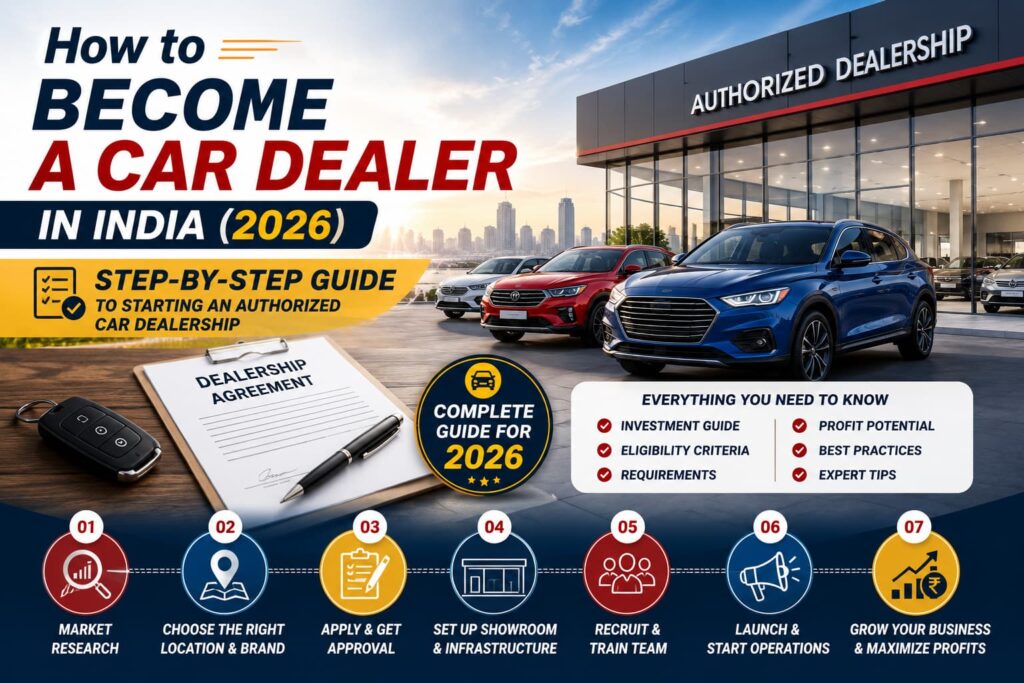
Starting an authorized car dealership is one of the most rewarding business opportunities in India’s automobile sector. Instead of building a new automobile brand from scratch, an authorized dealership allows entrepreneurs to partner with an established manufacturer, benefit from brand recognition, receive operational support, and generate revenue from multiple business streams including vehicle sales, servicing, spare parts, accessories, insurance, and finance.
India remains one of the world’s largest automobile markets, driven by rising disposable incomes, expanding road infrastructure, increasing urbanization, and growing demand for personal mobility. Premium vehicles, SUVs, electric cars, and commercial vehicles continue to attract new customers across metropolitan cities as well as Tier-2 and Tier-3 markets.
Whether you’re an experienced entrepreneur or planning your first large-scale investment, understanding the dealership process is essential before approaching manufacturers such as Maruti Suzuki, Hyundai, Tata Motors, Mahindra, Kia, Toyota, Honda, MG Motor, Volkswagen, Skoda, Nissan, Renault, or BYD.
In this comprehensive Franchise Hurt guide, you’ll learn the step-by-step process of becoming an authorized car dealer, including investment considerations, eligibility, infrastructure requirements, application procedures, and important factors to evaluate before investing.
Quick Overview
| Particulars | Details |
|---|---|
| Business Type | Authorized Car Dealership |
| Industry | Automobile |
| Investment Range | ₹2 Crore – ₹10 Crore+ (Estimated) |
| Revenue Sources | Vehicle Sales, Service, Spare Parts, Accessories, Insurance & Finance |
| Business Model | Manufacturer Authorized Dealer |
| Suitable For | Entrepreneurs, Investors, Business Groups |
| Setup Timeline | Approximately 6–18 Months (Varies by Brand) |
| Land Requirement | Depends on Brand Guidelines |
| Profit Model | Multiple Revenue Streams |
| Business Potential | High Long-Term Growth |
📝 FranchiseHurt Note
Investment requirements vary significantly between automobile manufacturers. The figures mentioned in this guide are estimated industry benchmarks and should not be considered official dealership quotations. For reliable franchise and dealership research, visit www.FranchiseHurt.com .
Table of Contents
What is an Authorized Car Dealership?
An authorized car dealership is a business officially approved by an automobile manufacturer to sell new vehicles and provide after-sales services under the company’s brand name.
Unlike independent used-car dealers, authorized dealerships operate according to manufacturer standards and represent the brand in a specific territory.
Most dealerships provide:
- New vehicle sales
- Test drive facilities
- Finance assistance
- Insurance services
- Exchange programs
- Genuine spare parts
- Warranty support
- Service workshops
- Accessories
- Customer relationship management
Manufacturers regularly monitor dealership performance to ensure customers receive consistent sales and service experiences.
Why Start a Car Dealership Business?
India’s passenger vehicle market continues to expand due to increasing household incomes, improved financing options, and growing consumer preference for personal transportation.
An authorized dealership offers several advantages over starting an independent automobile business.
Established Brand Recognition
Customers already recognize leading automobile brands, reducing the effort required to build trust.
Multiple Revenue Streams
Revenue is generated not only through vehicle sales but also from servicing, spare parts, accessories, finance commissions, insurance renewals, and extended warranties.
Manufacturer Support
Most automobile manufacturers provide:
- Product training
- Sales training
- Marketing assistance
- Technical support
- Dealer management systems
- Branding guidelines
- Warranty support
Long-Term Business Potential
Vehicle ownership creates recurring demand for maintenance, repairs, spare parts, and accessories, allowing dealerships to build long-term customer relationships.
Research Insights: Why India’s Car Dealership Industry Is Growing
India has become one of the world’s largest automobile markets, with consistent demand across passenger cars, SUVs, and electric vehicles.
According to the Society of Indian Automobile Manufacturers (SIAM), passenger vehicle sales have continued to grow in recent years, supported by strong consumer demand and new product launches. The Ministry of Heavy Industries has also introduced initiatives to promote domestic automobile manufacturing and electric mobility, encouraging further investment in the sector.
Government programs such as Make in India have strengthened India’s manufacturing ecosystem, while improved road infrastructure and easier vehicle financing have expanded the customer base beyond major metropolitan cities.
The growth of electric vehicles has also opened new opportunities for dealers, as manufacturers expand their EV portfolios alongside traditional petrol and diesel vehicles.
For entrepreneurs, this means that authorized dealerships can benefit from recurring income generated through vehicle sales, servicing, genuine spare parts, and long-term customer relationships.
Types of Car Dealerships
Not all dealerships operate under the same model. Manufacturers may appoint different types of dealerships depending on the city, market size, and business requirements.
Full-Scale Authorized Dealership
This is the most common dealership model.
It typically includes:
- Vehicle showroom
- Service workshop
- Spare parts department
- Customer lounge
- Delivery area
- Administrative office
These dealerships offer complete sales and after-sales support.
Sales Outlet
Some manufacturers establish sales-only outlets in areas where service operations are handled by a nearby workshop.
These outlets primarily focus on:
- Vehicle sales
- Customer enquiries
- Test drives
- Booking assistance
3S Dealership
A 3S dealership provides:
- Sales
- Service
- Spare Parts
Most major automobile brands prefer this model because it offers customers a complete ownership experience under one roof.
Premium Dealership
Luxury automobile manufacturers often appoint premium dealerships designed to meet higher infrastructure and customer experience standards.
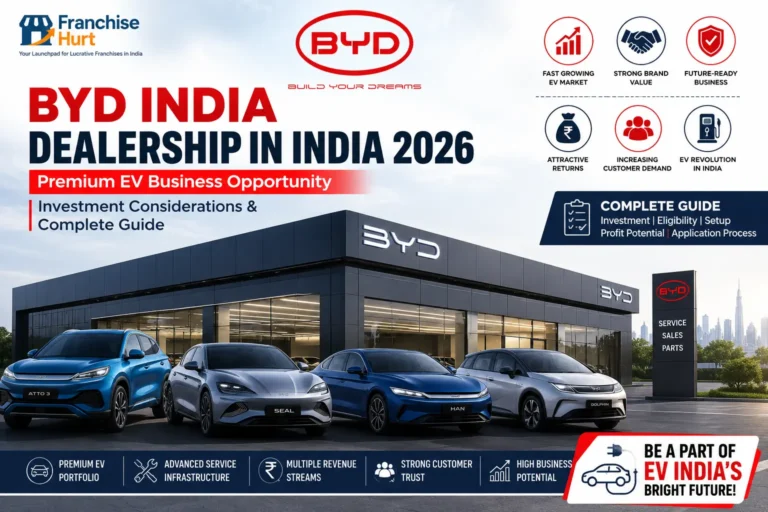
Examples include dealerships for premium brands such as Mercedes-Benz, BMW, Audi, Lexus, Volvo, and BYD.
Step 1: Decide Which Automobile Brand You Want to Represent
The first and most important decision is selecting the right automobile manufacturer.
Each brand has different:
- Investment requirements
- Infrastructure standards
- Market demand
- Dealer support
- Product portfolio
- Profit opportunities
Some popular options include:
| Brand | Segment |
|---|---|
| Maruti Suzuki | Mass Market |
| Hyundai | Passenger Vehicles |
| Tata Motors | Passenger & EV |
| Mahindra | SUVs & Utility Vehicles |
| Kia India | Premium Mass Market |
| Toyota | Premium Passenger Cars |
| Honda Cars India | Passenger Cars |
| MG Motor India | Premium & EV |
| Volkswagen India | Premium Segment |
| Skoda Auto India | Premium Segment |
| Renault India | Passenger Cars |
| Nissan India | Passenger Cars |
| BYD India | Premium Electric Vehicles |
💼 FranchiseHurt Tip
Before applying, evaluate the brand’s market share, customer demand, dealer network, service reputation, and future product roadmap. Making an informed decision can significantly improve your long-term business success. Explore more expert franchise and dealership guidance at www.FranchiseHurt.com .
Step 2: Conduct Market Research
Even the strongest automobile brand may struggle in the wrong location.
Before investing, analyze:
Population
A larger customer base generally creates greater sales potential.
Income Levels
Premium brands often perform better in cities with higher disposable incomes.
Competition
Study nearby dealerships representing competing brands.
Vehicle Demand
Identify whether local customers prefer:
- Hatchbacks
- Sedans
- SUVs
- Electric Vehicles
- Luxury Cars
Future Growth
Consider infrastructure projects, industrial development, and residential expansion that could increase future vehicle demand.
Also Read: BYD India Dealership
Step 3: Evaluate Your Financial Capacity
Car dealerships require significant investment and long-term financial planning.
Before applying, assess your ability to fund:
- Showroom setup
- Vehicle inventory
- Workshop equipment
- Spare parts inventory
- Staff salaries
- Marketing activities
- Operational expenses
- Working capital
Many successful dealerships rely on a combination of owner investment and commercial financing to support business operations.
Choosing a dealership that matches your financial capability is often more important than selecting the most popular automobile brand.
Step 4: Secure the Right Location & Infrastructure
The location of your dealership can significantly influence its long-term success. Most automobile manufacturers evaluate factors such as visibility, accessibility, market demand, and future growth before approving a dealership.
A standard car dealership generally requires:
Showroom
The showroom serves as the customer-facing area where vehicles are displayed and sales activities take place.
Typical facilities include:
- Vehicle display area
- Customer reception
- Sales consultation desks
- Finance & insurance desk
- Customer lounge
- Delivery area
Service Workshop
Most manufacturers prefer dealerships that provide complete after-sales support.
The workshop generally includes:
- Service bays
- Wheel alignment equipment
- Vehicle lifts
- Diagnostic tools
- Washing area
- Customer waiting area
Spare Parts Store
Maintaining genuine spare parts inventory helps improve customer satisfaction and generates additional revenue.
Parking Area
Adequate parking should be available for:
- Customer vehicles
- Display vehicles
- Test-drive vehicles
- Delivery vehicles
Office & Administration
A dealership also requires space for:
- Dealer Principal
- Administration
- Accounts
- Human Resources
- Customer Relationship Management (CRM)
💼 FranchiseHurt Tip
Infrastructure requirements vary by manufacturer. Always refer to the official dealership guidelines of the respective automobile company before planning your showroom. For more dealership insights and business opportunities, visit www.FranchiseHurt.com .
Step 5: Apply Through the Official Dealership Portal
Once you’ve selected the brand and prepared your infrastructure plan, the next step is to submit an official dealership application.
Most automobile manufacturers provide an online dealership enquiry form on their official website.
Applicants are generally required to provide:
- Personal details
- Business profile
- Company information (if applicable)
- Preferred dealership location
- Investment capability
- Infrastructure details
- Previous business experience
After submission, the manufacturer reviews the application based on business potential and market requirements.
Step 6: Company Evaluation & Site Inspection
If your application is shortlisted, the manufacturer may conduct a detailed evaluation.
This process may include:
Business Capability Assessment
The company reviews your financial strength, business background, and ability to manage dealership operations.
Market Potential Analysis
The manufacturer studies:
- Local population
- Vehicle demand
- Competition
- Existing dealer coverage
- Future market growth
Site Inspection
Company representatives may inspect the proposed location to verify whether it meets their showroom and workshop standards.
Approval timelines vary depending on the manufacturer and location.
Step 7: Sign the Dealership Agreement
Once approved, both parties finalize the dealership agreement.
The agreement generally covers:
- Dealership territory
- Business responsibilities
- Sales targets
- Branding guidelines
- Infrastructure standards
- Product supply
- Warranty obligations
- Service standards
- Commercial terms
Read every clause carefully before signing and seek professional legal or financial advice if necessary.
Step 8: Recruit & Train Your Team
A successful dealership depends on a skilled workforce.
Typical staff includes:
| Department | Key Roles |
|---|---|
| Sales | Sales Manager, Sales Consultants |
| Service | Service Manager, Technicians, Service Advisors |
| Spare Parts | Parts Manager, Store Executive |
| Customer Support | CRM Executive |
| Administration | Accountant, Office Administrator |
| Finance & Insurance | Finance Executive |
Most manufacturers provide product training and operational guidance before the dealership becomes operational.
Step 9: Launch Your Dealership
Before the grand opening, ensure that:
- Showroom branding is completed.
- Staff training is finished.
- Initial vehicle inventory has arrived.
- Workshop equipment is operational.
- Spare parts inventory is stocked.
- Digital systems are configured.
- Marketing campaigns are planned.
A successful launch often includes promotional events, test-drive campaigns, local advertising, and digital marketing initiatives.
Eligibility Criteria
Although requirements vary by manufacturer, applicants are generally expected to meet the following criteria.
Individuals
- Indian citizen
- Good financial capability
- Entrepreneurial mindset
- Business management skills
Business Entities
Manufacturers may also appoint:
- Proprietorship Firms
- Partnership Firms
- LLPs
- Private Limited Companies
Previous experience in the automobile industry is beneficial but not always mandatory.
Documents Required
Applicants may generally need the following documents.
Identity Documents
- Aadhaar Card
- PAN Card
- Passport-size Photographs
Business Documents
- GST Registration
- Business Registration Certificate
- Company Incorporation Documents (if applicable)
Financial Documents
- Income Tax Returns
- Bank Statements
- Net Worth Statement
- Financial Capability Proof
Property Documents
- Ownership Documents
- Lease Agreement (if applicable)
- Site Layout Plan
Manufacturers may request additional documents during the evaluation process.
Estimated Investment Required
The investment required for an authorized car dealership depends on the manufacturer, dealership category, showroom size, inventory requirements, workshop facilities, and city.
Estimated Investment Breakdown
| Investment Component | Estimated Cost (INR) |
|---|---|
| Showroom Interiors & Branding | ₹50 Lakh – ₹2 Crore |
| Workshop Equipment | ₹50 Lakh – ₹1.5 Crore |
| Initial Vehicle Inventory | ₹1 Crore – ₹5 Crore+ |
| Spare Parts Inventory | ₹20 Lakh – ₹75 Lakh |
| Office Furniture & IT Systems | ₹15 Lakh – ₹50 Lakh |
| Staff Recruitment & Training | ₹10 Lakh – ₹30 Lakh |
| Initial Marketing & Launch | ₹10 Lakh – ₹50 Lakh |
| Working Capital | ₹50 Lakh – ₹2 Crore |
| Estimated Total Investment | ₹2 Crore – ₹10 Crore+ |
⚠️ FranchiseHurt Investment Disclaimer
The investment figures above are estimated based on publicly available automobile dealership information, industry benchmarks, and market research. Automobile manufacturers do not publish a standard dealership investment applicable to every location. Actual investment requirements vary depending on the brand, dealership category, inventory, infrastructure, city, and company policies. FranchiseHurt recommends that prospective applicants confirm the latest commercial terms directly with the respective automobile manufacturer before making any investment.
Revenue Streams of a Car Dealership
One of the biggest advantages of an authorized dealership is that revenue is generated from multiple business activities.
Vehicle Sales
New passenger vehicles remain the primary source of revenue.
Service & Maintenance
Periodic servicing generates recurring customer visits and long-term business.
Genuine Spare Parts
The sale of genuine spare parts contributes significantly to dealership revenue.
Accessories
Dealers may also sell:
- Seat covers
- Floor mats
- Alloy wheels
- Infotainment accessories
- Vehicle care products
Insurance
Many dealerships facilitate vehicle insurance and policy renewals.
Vehicle Finance
Banks and NBFCs often partner with dealerships, allowing dealers to earn commissions on financed vehicle sales.
Extended Warranty & Value-Added Services
Additional services such as extended warranties, roadside assistance, and maintenance packages can further enhance profitability.
Estimated Monthly Profit Potential
Profitability varies widely depending on the automobile brand, dealership size, sales volume, location, workshop utilization, and operational efficiency.
| Revenue Source | Estimated Monthly Profit Potential |
|---|---|
| Vehicle Sales | ₹5 Lakh – ₹40 Lakh |
| Service & Maintenance | ₹2 Lakh – ₹15 Lakh |
| Spare Parts | ₹1 Lakh – ₹8 Lakh |
| Accessories | ₹50,000 – ₹5 Lakh |
| Insurance & Finance | ₹1 Lakh – ₹8 Lakh |
| Estimated Total Monthly Profit Potential* | ₹10 Lakh – ₹60 Lakh+ |
📊 FranchiseHurt Profit Disclaimer
The figures above represent estimated monthly profit potential based on industry benchmarks and publicly available market information. Actual profitability depends on vehicle sales, workshop performance, customer retention, operating expenses, financing partnerships, staffing costs, and overall dealership management. These figures should not be considered guaranteed earnings. FranchiseHurt recommends that readers conduct their own financial assessment before investing and evaluate all business risks, operating costs, and market conditions independently.
Common Mistakes to Avoid
Many new dealers underestimate the importance of planning. Avoid these common mistakes:
- Choosing a location with low vehicle demand.
- Underestimating working capital requirements.
- Ignoring after-sales service quality.
- Hiring inexperienced staff without proper training.
- Maintaining insufficient spare parts inventory.
- Focusing only on vehicle sales instead of recurring revenue streams.
- Neglecting digital marketing and customer relationship management.
Best Car Brands Offering Dealership Opportunities in India
Choosing the right automobile brand is one of the most important decisions when starting a dealership. Every manufacturer has different investment requirements, customer segments, infrastructure standards, and business potential.
Below are some of the leading car brands that offer authorized dealership opportunities in India.
| Brand | Segment | Estimated Investment | Business Potential |
|---|---|---|---|
| Maruti Suzuki | Mass Market | ₹2–5 Crore+ | ⭐⭐⭐⭐⭐ |
| Hyundai Motor India | Passenger Cars | ₹2–6 Crore+ | ⭐⭐⭐⭐⭐ |
| Tata Motors | Passenger & EV | ₹2–6 Crore+ | ⭐⭐⭐⭐⭐ |
| Mahindra Auto | SUVs & Utility Vehicles | ₹2–7 Crore+ | ⭐⭐⭐⭐⭐ |
| Kia India | Premium Mass Market | ₹3–8 Crore+ | ⭐⭐⭐⭐☆ |
| Toyota Kirloskar | Premium Cars | ₹3–10 Crore+ | ⭐⭐⭐⭐☆ |
| Honda Cars India | Passenger Cars | ₹2–6 Crore+ | ⭐⭐⭐⭐☆ |
| MG Motor India | Premium & EV | ₹3–8 Crore+ | ⭐⭐⭐⭐☆ |
| BYD India | Premium Electric Vehicles | ₹1–3 Crore+* | ⭐⭐⭐⭐☆ |
| Skoda Auto India | Premium Cars | ₹3–8 Crore+ | ⭐⭐⭐⭐☆ |
| Volkswagen India | Premium Cars | ₹3–8 Crore+ | ⭐⭐⭐⭐☆ |
| Renault India | Passenger Cars | ₹2–5 Crore+ | ⭐⭐⭐⭐☆ |
| Nissan India | Passenger Cars | ₹2–5 Crore+ | ⭐⭐⭐⭐☆ |
FranchiseHurt Advisory
Business Planning RecommendationThe investment figures above are estimated based on industry benchmarks and publicly available information. Actual dealership costs vary depending on the manufacturer, location, dealership format, and infrastructure requirements. Before making any investment decision, compare multiple dealership opportunities and verify the latest commercial details directly with the respective automobile manufacturer. Learn more at www.FranchiseHurt.com .
Advantages of Starting an Authorized Car Dealership
An authorized dealership provides several long-term benefits compared to operating an independent automobile business.
Established Brand Recognition
Partnering with a well-known automobile manufacturer allows you to leverage existing customer trust and brand reputation.
Multiple Revenue Streams
Dealerships can earn revenue through:
- New vehicle sales
- Genuine spare parts
- Workshop services
- Vehicle accessories
- Insurance facilitation
- Finance assistance
- Extended warranty packages
Manufacturer Support
Most automobile companies provide:
- Product training
- Technical support
- Marketing assistance
- Dealer management software
- Branding guidelines
- Warranty support
- Sales process training
Long-Term Customer Relationships
Customers typically return to authorized dealerships for servicing, spare parts, warranty claims, and vehicle upgrades, creating recurring business opportunities.
Challenges to Consider
Like any large business investment, running a car dealership also involves challenges.
Some common challenges include:
- High initial investment
- Working capital management
- Achieving monthly sales targets
- Recruiting skilled technicians
- Maintaining customer satisfaction
- Inventory planning
- Competition from nearby dealerships
- Changing consumer preferences
Entrepreneurs should prepare a detailed business plan and financial strategy before applying for a dealership.
Future Outlook
India’s automobile industry is expected to remain one of the largest in the world over the coming decade. Rising disposable incomes, infrastructure development, improved financing options, and increasing demand for personal mobility continue to support vehicle sales across the country.
Electric vehicles are also expected to play an increasingly important role in the future of the automobile market. Major manufacturers are expanding their EV portfolios while continuing to invest in hybrid and internal combustion engine (ICE) vehicles.
In addition, after-sales services, genuine spare parts, accessories, and digital customer engagement are becoming significant contributors to dealership profitability.
Entrepreneurs who focus on customer experience, operational excellence, and long-term relationships are likely to be better positioned for sustained success.
Conclusion
Starting an authorized car dealership in India can be a rewarding long-term business opportunity for entrepreneurs with the financial capability, infrastructure, and commitment to delivering excellent customer service. By partnering with an established automobile manufacturer, dealers benefit from brand recognition, technical support, structured business processes, and multiple recurring revenue streams.
Before investing, compare different automobile brands, evaluate local market demand, understand the manufacturer’s requirements, and prepare a realistic financial plan. Conduct thorough due diligence and rely on official company information when making business decisions.
Explore Other Bikes and Cars Dealerships
Frequently Asked Questions (FAQs)
1. Can anyone become an authorized car dealer?
Ans: Yes. Individuals, business groups, LLPs, partnership firms, and private limited companies can apply, subject to the manufacturer’s eligibility criteria and market evaluation.
2. How much investment is required to start a car dealership?
Ans: The estimated investment generally ranges from ₹2 crore to ₹10 crore or more, depending on the automobile brand, infrastructure, inventory, and dealership format.
3. Is previous automobile business experience mandatory?
Ans: Not always. While prior business or automobile industry experience can be advantageous, many manufacturers also evaluate financial capability, infrastructure, and management skills.
4. Which car dealership requires the lowest investment?
Ans: Investment requirements vary by manufacturer. Mass-market brands generally require lower investment than luxury automobile brands.
5. Do I need to own land?
Ans: Some manufacturers accept leased commercial property, while others may prefer owned premises. Requirements differ by company and dealership category.
6. Can I apply online for a dealership?
Ans: Yes. Most automobile manufacturers provide an official dealer enquiry or dealership application form on their websites.
7. How long does dealership approval take?
Ans: Approval timelines vary depending on the manufacturer, market assessment, infrastructure readiness, and documentation. The process may take several weeks to several months.
8. What are the main sources of dealership income?
Ans: Revenue is generally generated through:
Vehicle sales
Service and maintenance
Genuine spare parts
Accessories
Insurance
Finance commissions
Extended warranty programs
9. Is a service workshop mandatory?
Ans: For most authorized 3S dealerships (Sales, Service, and Spare Parts), a service workshop is an essential requirement.
10. Which car brand is best for a dealership?
Ans: The right brand depends on your investment capacity, target market, competition, and business objectives. Popular choices include Maruti Suzuki, Hyundai, Tata Motors, Mahindra, Toyota, and Kia.
11. Can I own multiple dealerships?
Ans: Yes. Subject to company policies and business performance, some manufacturers allow successful dealer groups to operate multiple dealerships.
12. Are dealership profits guaranteed?
Ans: No. Profitability depends on vehicle sales, customer demand, workshop performance, spare parts sales, operational efficiency, and local market conditions.