Bindu Distributorship in India 2026: Investment, Profit Margin & How to Apply
Introduction
If you’ve been thinking about starting a distribution business, the FMCG sector is probably one of the first places you’ll look. People buy food and beverages every day, which means retailers need regular stock. That’s one reason many entrepreneurs consider beverage distribution.
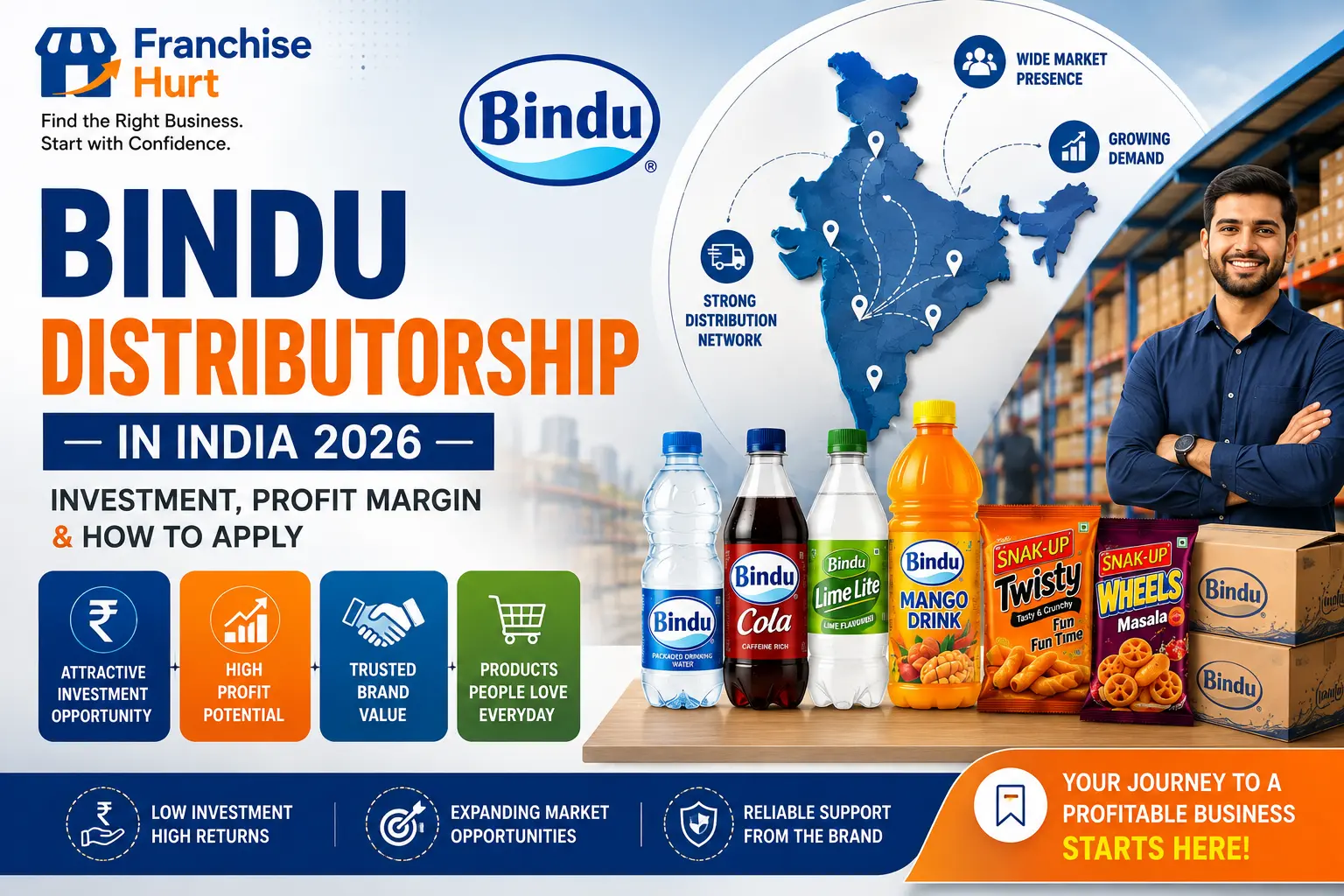
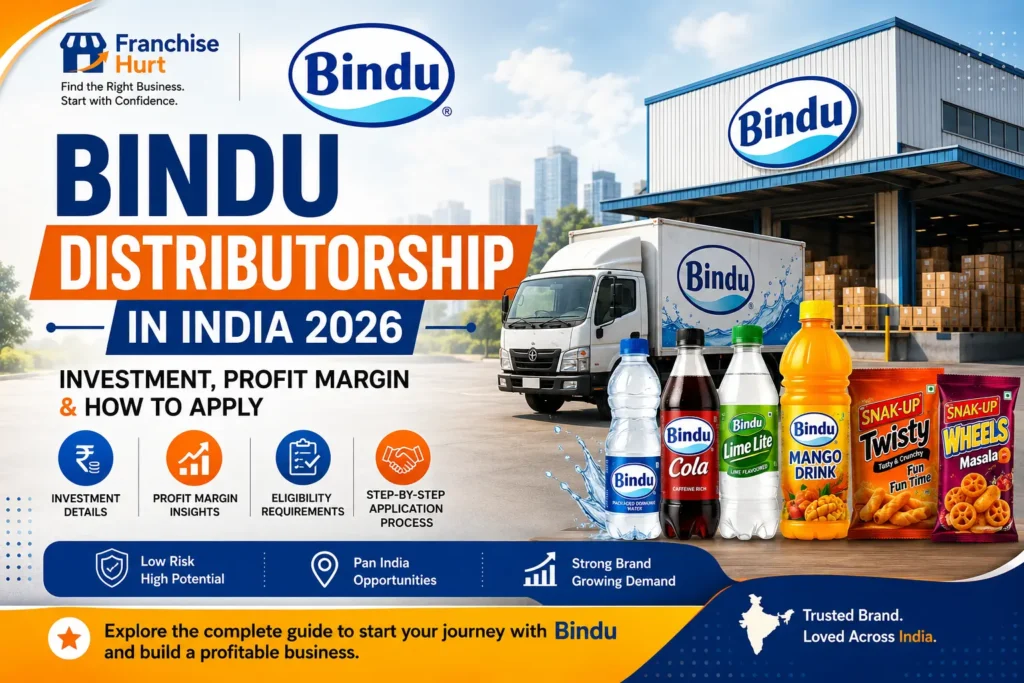
One brand you may have come across is Bindu. The company offers packaged drinking water, soft drinks, fruit drinks, and snacks through its distribution network. If you’re already supplying products to grocery stores or supermarkets, adding another FMCG brand might be worth exploring.
Before making any decision, it’s important to understand how this business works. In this guide, we’ll look at the estimated investment, the setup you’ll need, how distributors usually earn, and the questions you should ask before applying.
Quick Overview
| Particular | Details |
|---|---|
| Brand | Bindu |
| Parent Company | SG Corporates (Megha Fruit Processing Pvt. Ltd.) |
| Industry | FMCG – Beverages & Snacks |
| Business Model | Distributorship |
| Products | Packaged Water, Soft Drinks, Fruit Drinks, Snacks |
| Investment | Estimated ₹8–25 Lakhs* |
| Suitable For | FMCG Distributors & Wholesale Businesses |
| Official Website | House of Bindu |
The company has not publicly disclosed the official investment amount. The estimate is based on similar FMCG distribution businesses.
Table of Contents
About Bindu
Walk into a supermarket in Telangana, Andhra Pradesh, or Karnataka, and there’s a good chance you’ll find Bindu products on the shelves. Over the years, the brand has built a presence in the beverage market with products that are already familiar to many retailers and consumers.
Bindu is part of SG Corporates, which operates in the FMCG sector with a range of beverages and packaged food products. Instead of focusing on a single product, the company has expanded into multiple categories, allowing retailers to stock different items under the same brand.
For distributors, this can be useful because supplying multiple products often means larger orders from the same customer.
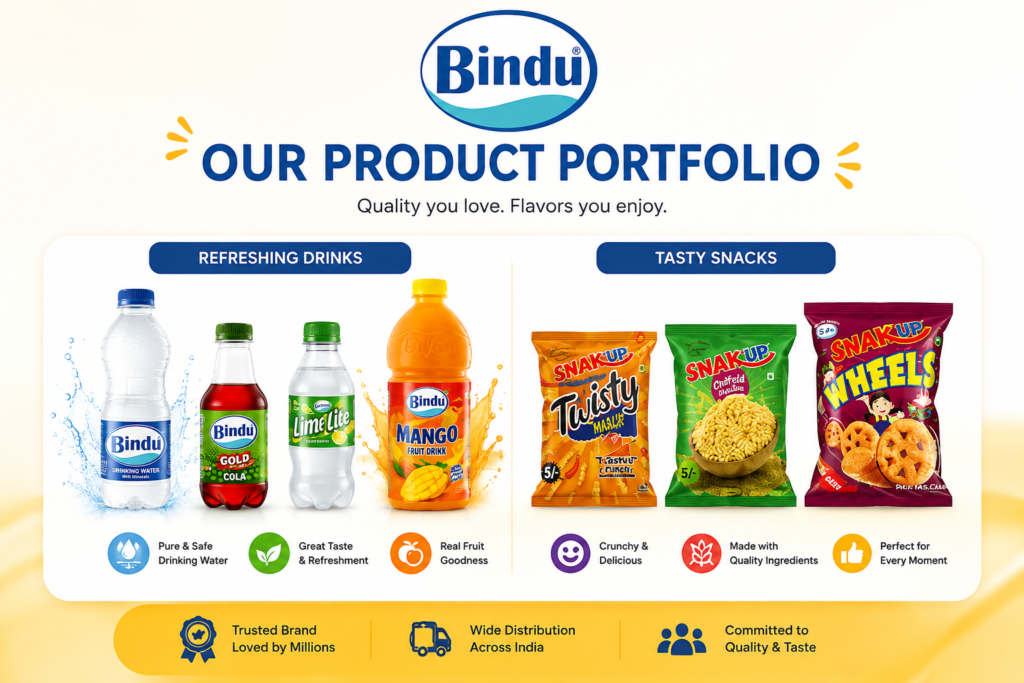
Product Portfolio
One thing that stands out about Bindu is that it isn’t limited to just one type of beverage.
The company offers products across different categories, giving retailers more options and helping distributors serve different types of customers.
Packaged Drinking Water
Water is usually one of the fastest-moving products in the beverage business. Retailers, restaurants, offices, and event organisers purchase it throughout the year, making it an important category for distributors.
Soft Drinks
Bindu also offers carbonated beverages in different flavours and pack sizes. These products generally see higher demand during summer, festivals, and local events.
Fruit Drinks
Fruit-based beverages appeal to customers looking for alternatives to carbonated drinks. They are commonly stocked in supermarkets, grocery stores, and convenience stores.
Snacks
Apart from beverages, the company also offers snack products. This gives distributors an opportunity to supply more than one category during a single retailer visit instead of focusing only on drinks.
Also Read: Artos Distributorship
Why Entrepreneurs Consider Bindu
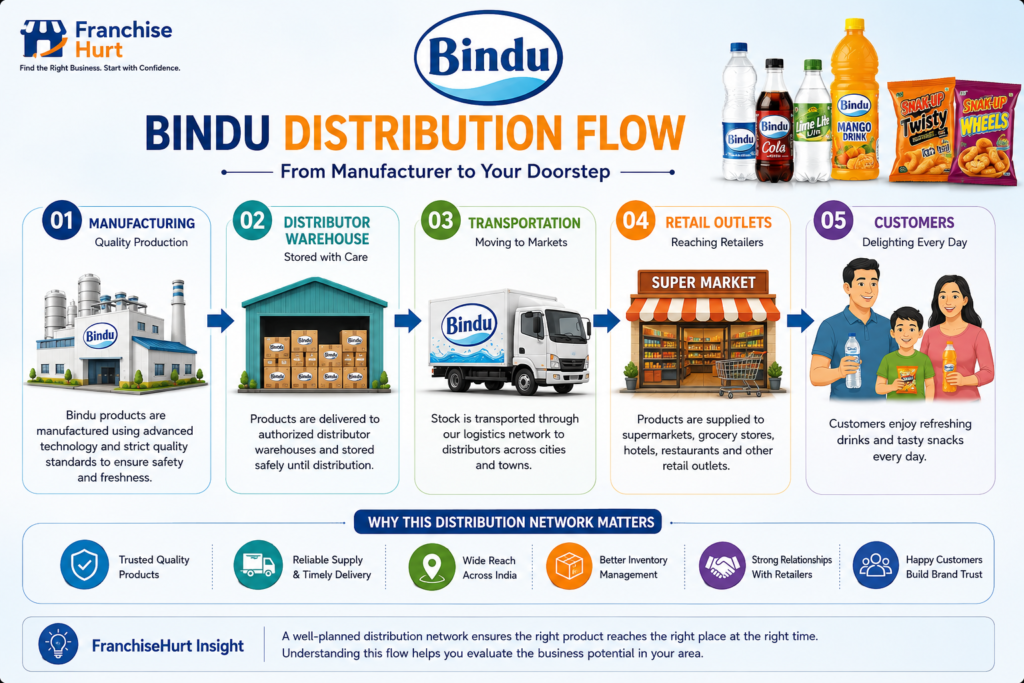
Not every beverage brand attracts distributors for the same reasons. In Bindu’s case, a few practical factors make people consider the opportunity.
The first is product variety. Since the company offers beverages as well as snacks, distributors can serve different retail needs without working with multiple suppliers.
The second is regular demand. Grocery stores, supermarkets, and restaurants replenish beverage stock frequently because these are everyday consumer products.
Another reason is that many entrepreneurs who already distribute FMCG products don’t have to start from scratch. They may already have retailer contacts, delivery routes, and storage facilities, making it easier to add another product line.
Finally, regional brands often have loyal customers in the markets where they are well established. That existing demand can make it easier for retailers to continue stocking the products.
How Much Should You Budget?
This is probably the first question most people ask before considering any distributorship.
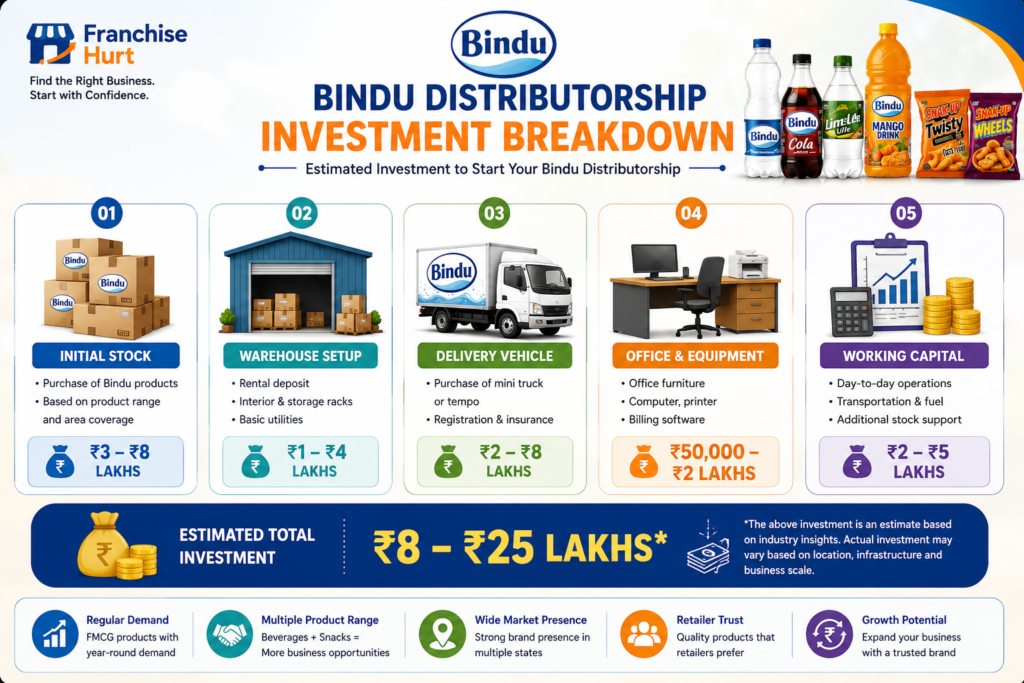
The truth is, Bindu hasn’t publicly shared the exact investment required for its distributors. The final amount depends on where you plan to operate, how much stock you need to keep, and whether you already have basic business infrastructure.
If you’re already running a grocery wholesale or FMCG distribution business, you may not need to invest as much because you might already own a warehouse or delivery vehicle.
Estimated Investment
| Expense | Estimated Cost* |
|---|---|
| Initial Stock | ₹3 Lakhs – ₹8 Lakhs |
| Warehouse Setup | ₹1 Lakh – ₹4 Lakhs |
| Delivery Vehicle | ₹2 Lakhs – ₹8 Lakhs |
| Office & Equipment | ₹50,000 – ₹2 Lakhs |
| Working Capital | ₹2 Lakhs – ₹5 Lakhs |
| Estimated Total | ₹8 Lakhs – ₹25 Lakhs |
These are industry estimates based on similar FMCG distribution businesses. Contact Bindu directly for the latest commercial details.
What Setup Will You Need?
A beverage distributorship is more than buying stock and supplying it to retailers. You’ll need a basic setup to store products safely and deliver them on time.
Most distributors generally have:
- A warehouse or storage space
- A small office for billing and records
- One or more delivery vehicles
- Storage racks
- A computer with billing software
- Internet connection
If you’re already in the FMCG business, there’s a good chance you already have some of these facilities.
Is This Business Right for You?
Every distributorship isn’t suitable for everyone.
Based on how beverage distribution works, this business may suit you if you:
- Already supply products to retail shops
- Run a wholesale business
- Have experience in FMCG
- Can manage stock and deliveries
- Want to expand your existing product range
On the other hand, if you’re looking for a business that runs without daily involvement, this may not be the right fit. Distribution usually requires regular retailer visits, planning deliveries, and keeping track of inventory.
How Do Distributors Earn?
Many people assume distributors earn a fixed commission on every product. In reality, the business is a little different.
A distributor buys products from the company and supplies them to retailers. The income depends on several factors, including:
- Monthly sales
- Number of active retailers
- Product demand
- Operating costs
- Stock movement
For example, a distributor supplying 300–400 retail stores is likely to have a different earning potential than someone supplying only a few local shops.
The company hasn’t publicly disclosed distributor margins, so it’s always best to discuss commercial terms directly before making any investment.
🚀 List Your Franchise, Dealership or Distributorship on FranchiseHurt
Reach thousands of entrepreneurs across India and grow your business with a featured listing.
📢 Submit Your FREE Listing LIMITED TIME • FREEChallenges You Should Know
Like any business, beverage distribution comes with its own challenges.
Competition
Retailers usually stock products from more than one brand. Building good relationships and providing reliable service often matters as much as the products themselves.
Stock Planning
Ordering too much stock can tie up your money, while ordering too little may lead to missed sales. Finding the right balance takes experience.
Transportation Costs
Fuel prices, vehicle maintenance, and delivery schedules can affect your monthly operating costs.
Seasonal Demand
Soft drinks generally sell more during the summer, while packaged drinking water tends to have steady demand throughout the year. Planning your inventory around seasonal demand can help reduce unnecessary stock.
Also Read: Swastik Spices Dealership
A Small Observation
During our research, one thing stood out. Bindu doesn’t just offer beverages—it also has snack products.
For a distributor, this could be an advantage because supplying more than one product category can increase the value of each retailer order. Instead of delivering only beverages, you may be able to supply snacks during the same visit, depending on the products available in your area.
How to Apply for a Bindu Distributorship
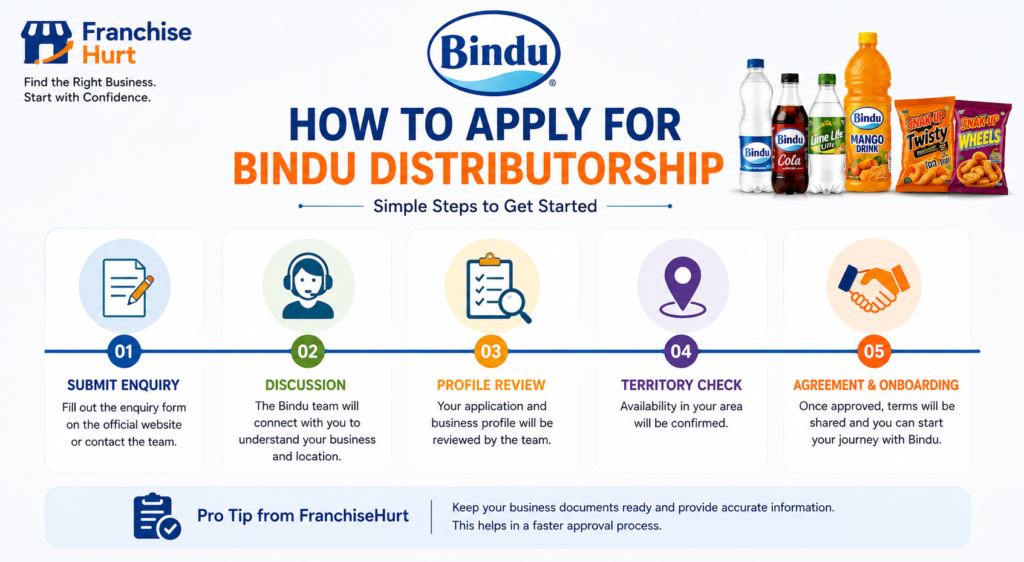
If you’ve decided to explore this opportunity, the next step is to contact the company directly.
At the time of writing, House of Bindu does not have a separate “Become a Distributor” page. Business enquiries can be submitted through the Contact Us page on the official website. If the company is looking to expand in your area and your business profile matches its requirements, a representative may contact you for further discussion.
When you send an enquiry, don’t just write “I need a distributorship.” Introduce your business in a few lines. Mention your location, your experience (if any), and why you’re interested in working with the brand. A clear introduction often creates a better first impression.
🥤 Ready to Apply for a Bindu Distributorship?
Visit the official House of Bindu contact page and submit your business enquiry to explore distributorship opportunities in your preferred location.
🚀 Apply on Official WebsiteQuestions to Ask Before You Invest
Many entrepreneurs focus only on the investment amount. While that’s important, it’s not the only thing that matters.
Before making a decision, try to get answers to these questions.
Is My Area Available?
Some cities or districts may already have an appointed distributor. Ask whether your preferred location is open for new applications.
Which Products Sell the Most?
Every market is different. Knowing which products move faster in your area will help you plan your stock more efficiently.
How Often Will I Need to Place Orders?
Understanding the ordering process helps you estimate working capital and warehouse requirements.
Is Marketing Support Available?
Some companies provide promotional materials or retailer support during product launches. It’s worth asking what kind of assistance is available.
Who Will Be My Point of Contact?
Knowing whom to contact for orders, support, or product-related queries can make day-to-day operations much easier.
Should You Consider a Bindu Distributorship?
There isn’t a simple yes or no answer because every business depends on the local market.
If you already supply products to grocery stores, supermarkets, or wholesalers, adding another FMCG brand could fit naturally into your existing business. You already understand deliveries, retailer relationships, and stock management.
If you’re completely new to distribution, take some time to understand how the business works before investing. Speaking with existing distributors, visiting local retailers, and studying the demand in your area can give you a clearer picture.
One thing worth remembering is that success in distribution usually depends more on execution than on the brand itself.
FranchiseHurt Research Notes
While researching Bindu, we found that the company shares information about its products, manufacturing facilities, and contact details through its official website. However, details such as distributor investment, security deposit, profit margins, and territory availability are not publicly available.
If you’re planning to apply, make sure you discuss these points directly with the company’s sales team. Getting clear answers before investing can help you avoid misunderstandings later.
Before You Decide
Before filling out the enquiry form, spend an hour visiting a few retailers in your area.
Ask simple questions like:
- Do customers regularly buy Bindu products?
- Which products sell the fastest?
- How often do they receive fresh stock?
- Would they be interested in buying from another distributor?
These conversations will give you practical information that you won’t find on most websites.
Final Thoughts
A Bindu distributorship may be worth exploring if you’re looking to expand your FMCG business and already have some experience in wholesale or retail distribution. The company offers products that are part of everyday consumer demand, which can help create regular business for distributors.
At the same time, every market is different. Before investing, understand the local demand, compare similar beverage brands, and discuss the commercial terms directly with the company. Taking a little extra time to research now can help you make a more informed business decision.
Explore Car & Bike Dealerships
Frequently Asked Questions (FAQs)
1. Is Bindu offering distributorship opportunities?
Ans: House of Bindu accepts business enquiries through its official Contact Us page. You can contact the company to check whether distributor opportunities are available in your preferred location.
2. How much investment is required?
Ans: The company has not publicly shared the official investment amount. The total investment depends on factors such as inventory, infrastructure, and the size of the distribution area.
3. Does Bindu disclose distributor profit margins?
Ans: No. Profit margins and commercial terms are not available on the company’s official website and may vary depending on the business agreement.
4. Can a beginner apply for a Bindu distributorship?
Ans: Yes, but having experience in FMCG, wholesale, or retail distribution can be an advantage. If you’re new to the business, it’s a good idea to understand the distribution process before investing.
5. What products does Bindu offer?
Ans: Bindu offers packaged drinking water, carbonated soft drinks, fruit drinks, and snack products through its distribution network.
6. How can I contact Bindu?
Ans: You can submit a business enquiry through the official House of Bindu Contact Us page.
7. Is this business suitable for small towns?
Ans: That depends on local demand and whether the company is looking to appoint distributors in your area. It’s best to confirm territory availability directly with the company.
8. What should I ask before signing any agreement?
Ans: Ask about territory availability, expected stock levels, payment terms, marketing support, delivery process, and any other commercial conditions. Having clear information upfront will help you make a better decision.