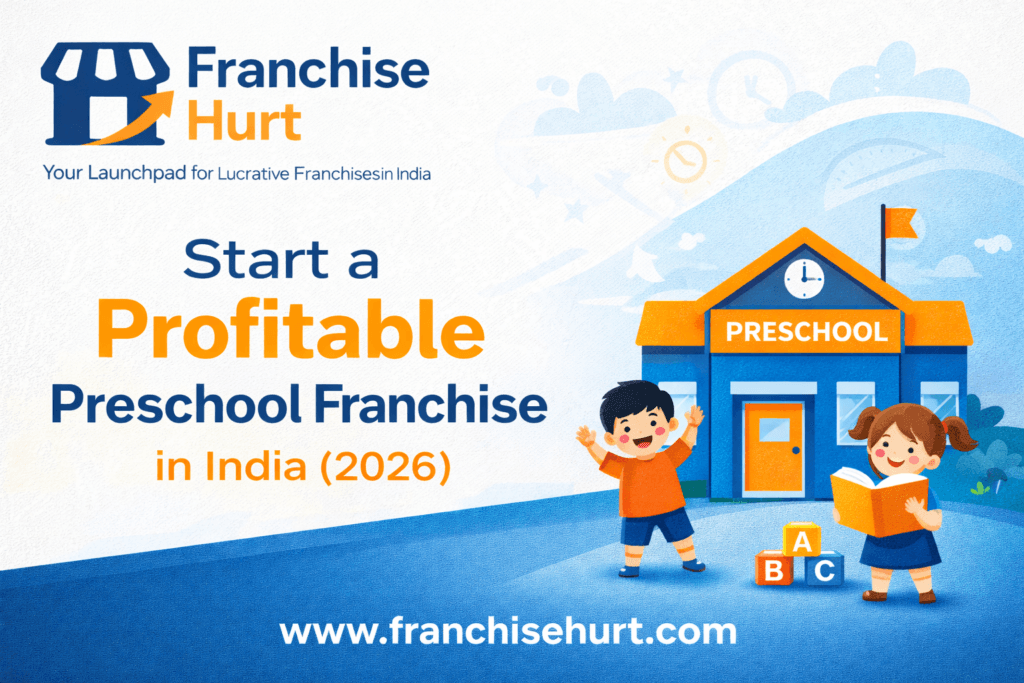
Start a Profitable Preschool Franchise in India (2026) – Complete Guide
Quick Overview – Preschool Franchise in India
| Particulars | Details |
|---|---|
| Industry | Early Childhood Education |
| Investment Range | ₹8 – ₹20 Lakhs |
| Space Required | 1,000 – 2,500 sq. ft. |
| Break-even Period | 18 – 30 Months |
| Profit Potential | ₹70,000 – ₹2 Lakhs/month |
| Suitable For | Educators, entrepreneurs, women business owners |
Table of Contents
What is a Preschool Franchise?
A preschool franchise is a business model where an entrepreneur operates an early childhood education center under an established brand name. Instead of creating your own curriculum, brand identity, and teaching structure from scratch, you partner with an existing preschool brand that provides:
- Curriculum & teaching framework
- Branding & marketing support
- Teacher training programs
- Operational guidelines (SOPs)
- Admission process structure
In simple terms, you run your own preschool business, but with the support and recognition of a trusted brand. This reduces uncertainty and improves credibility among parents.
Why Choose a Preschool Franchise Instead of Starting Independently?
Starting an independent preschool requires:
- Curriculum design
- Brand building
- Marketing strategy
- Parent trust development
- Teacher recruitment & training systems
A franchise reduces these challenges because:
✔ The brand is already trusted
✔ The curriculum is structured
✔ Training systems are in place
✔ Marketing support is available
✔ Risk is comparatively lower
This makes preschool franchising one of the most stable education-based business opportunities in India.
Research Insights: Why Preschool Business Has Strong Potential
Understanding market data builds confidence before investing.
📊 1. India’s Education Sector Growth
India’s education market is projected to reach approximately US$ 225 billion by FY25, reflecting strong long-term demand for organized education services.
Source:
IBEF – Education & Training Industry in India
https://www.ibef.org/industry/education-sector-india
📈 2. Rising Pre-Primary Enrollment
According to government education statistics, India has millions of children entering pre-primary age groups annually, with increasing enrollment in organized preschool programs.
Source:
Ministry of Education – Unified District Information System for Education (UDISE+)
https://udiseplus.gov.in
👩👩👧 3. Growing Working Women Population
With increasing working parents, demand for structured early childhood centers is steadily rising.
Source:
World Bank Data – Female Labor Force Participation
https://data.worldbank.org
These indicators show long-term demand for quality preschool education in India.
Understanding the Preschool Industry in India
Early childhood education in India is growing steadily due to:
- Increasing working parents
- Rising awareness about structured early learning
- Nuclear family culture
- Growing urbanization
- Focus on child development skills
Parents today prioritize:
- Safe environment
- Quality curriculum
- English communication exposure
- Personality development
Preschool education is also relatively recession-resistant because parents rarely compromise on early education.
Step-by-Step Guide to Opening a Preschool Franchise in India
Step 1: Decide Your Budget
Before approaching any brand, determine:
- Total capital available
- Working capital reserve (6 months buffer recommended)
- Rental affordability
A safe starting investment range is ₹10–₹15 Lakhs for metro areas.
Step 2: Research and Select the Right Preschool Brand
While selecting a franchise, evaluate:
- Brand reputation
- Years in operation
- Curriculum quality (Montessori / Play-way / Reggio Emilia)
- Franchise fee & royalty structure
- Marketing support
- Teacher training support
- Existing franchise network performance
Choose a brand with transparent financial details and strong support systems.
Step 3: Finalize Location
Location is critical.
Ideal Location:
- Residential areas
- Near apartment complexes
- Safe surroundings
- Ground floor property
- 1,000–2,500 sq. ft. space
Avoid:
- Industrial zones
- High-traffic unsafe roads
- Areas with too many competing preschools
Location directly affects admissions and profitability.
Step 4: Complete Legal Formalities
Basic requirements may include:
- Business registration (Proprietorship / LLP / Pvt Ltd)
- Trade license
- Fire safety certificate
- Municipal approval
- CCTV installation
- GST registration (if applicable)
Compliance builds parent trust and ensures smooth operations.
Step 5: Infrastructure Setup
Preschool infrastructure should include:
- Colorful classrooms
- Child-safe furniture
- Activity & play area
- Washrooms designed for kids
- CCTV surveillance
- Reception area
Safety and hygiene standards are extremely important in building reputation.
Step 6: Hire & Train Staff
You typically need:
- 2–5 trained teachers
- 1–2 helpers
- Admin support
Most franchise brands provide teacher training and curriculum orientation.
Staff quality directly impacts parent satisfaction and retention.
Step 7: Marketing & Student Admissions
Marketing strategies include:
- Pamphlet distribution in residential areas
- Social media campaigns
- Apartment society tie-ups
- Demo classes
- Parent orientation programs
- Referral programs
Admissions usually start 3–4 months before the academic year.
Investment Breakdown
| Expense Category | Approximate Cost |
|---|---|
| Franchise Fee | ₹2 – ₹5 Lakhs |
| Interiors & Setup | ₹4 – ₹8 Lakhs |
| Furniture & Learning Materials | ₹2 – ₹4 Lakhs |
| Marketing & Launch | ₹1 – ₹2 Lakhs |
| Working Capital | ₹2 – ₹3 Lakhs |
Total Estimated Investment: ₹8 – ₹20 Lakhs
Revenue & ROI Example
Let’s assume:
80 students
Average monthly fee: ₹3,000
Monthly Revenue: ₹2,40,000
Monthly Expenses:
- Salaries: ₹80,000
- Rent: ₹40,000
- Utilities: ₹20,000
- Royalty: ₹15,000
- Miscellaneous: ₹15,000
Total Expenses: ₹1,70,000
Estimated Monthly Net: ₹70,000
Annual Profit: ₹8–₹12 Lakhs
Break-even Timeline: 18–30 months
Disclaimer: FranchiseHurt (www.franchisehurt.com) does not guarantee profitability or business success. This article is for informational purposes only and should not be considered financial advice.
Pros & Cons of Preschool Franchise
Pros
✔ Recurring income model
✔ Stable demand
✔ Brand support
✔ Socially meaningful business
✔ Strong growth in tier-2 cities
Cons
✖ Location sensitive
✖ Admission dependent
✖ Requires daily involvement
✖ Moderate initial investment
Risk Factors & How to Minimize Them
Risks
- Low admissions
- Competition nearby
- Poor staff retention
- Regulatory issues
Risk Reduction
- Choose strong brand
- Focus on quality & safety
- Maintain parent engagement
- Invest in consistent local marketing
Who Should Start a Preschool Franchise?
Best suited for:
- Women entrepreneurs
- Educators
- Parents wanting stable business
- Investors in residential areas
Not suitable for:
- Passive investors
- Individuals unwilling to manage operations daily
Future Outlook
With rising awareness about early childhood education and increasing working parents, the preschool industry is expected to grow steadily in 2026 and beyond.
Tier-2 and tier-3 cities offer high growth potential with lower competition and affordable rental costs.
A well-managed preschool franchise can become a long-term, stable, and community-trusted business.
Conclusion
Opening a preschool franchise in India can be a stable and rewarding business opportunity when planned correctly. With structured brand support, recurring fee income, and growing demand for early childhood education, the model offers long-term sustainability for hands-on entrepreneurs. Success depends on strong admissions, quality staff, and efficient cost management.
FAQs – Preschool Franchise in India
1. How much investment is needed?
Ans: Typically ₹8–₹20 Lakhs depending on brand and city.
2. Is preschool franchise profitable?
Ans: Yes, with strong admissions and management, it can generate stable recurring income.
3. Do I need teaching experience?
Ans: Not mandatory, but supervision and management skills are important.
4. What is the break-even period?
Ans: Usually 18–30 months.
5. How many students are needed to break even?
Ans: Around 50–70 students depending on fee structure.