Daawat Rice Distributorship in India 2026: Investment, Profit Margin & Apply Online
Introduction
If you’ve ever purchased premium basmati rice, there’s a good chance you’ve come across Daawat. It’s one of India’s well-known rice brands and is available in supermarkets, grocery stores, and online marketplaces across the country. The brand is owned by LT Foods, a company with decades of experience in rice processing and exports.
Because Daawat has a strong retail presence, many entrepreneurs wonder whether they can become a distributor and supply the brand to retailers in their area.
If you’re considering this business, it’s important to understand how FMCG distribution works before making any investment. In this guide, we’ll explain the estimated investment, the type of setup you may need, how distributors generally earn, and how you can contact the company for business enquiries.
Quick Overview
| Particular | Details |
|---|---|
| Brand | Daawat |
| Parent Company | LT Foods Limited |
| Industry | FMCG – Food & Grocery |
| Product Category | Basmati Rice & Specialty Rice |
| Business Model | Distributor / Channel Partner |
| Estimated Investment | ₹10 Lakhs – ₹30 Lakhs* |
| Suitable For | FMCG Distributors & Grocery Wholesalers |
| Official Website | LT Foods |
Note: LT Foods has not publicly disclosed the official investment or distributor margin for every region. The figures mentioned in this article are based on industry estimates and similar FMCG distribution businesses.
Table of Contents
About LT Foods and Daawat
Walk into almost any supermarket in India, and you’ll likely find Daawat rice on the shelf. Over the years, the brand has become a familiar choice for households, restaurants, and hotels looking for premium basmati rice.
Daawat is owned by LT Foods Limited, an Indian food company established in 1990. While the brand is best known for basmati rice, the company has expanded into ready-to-cook products, organic foods, and health-focused rice varieties. Today, LT Foods exports its products to many international markets while continuing to strengthen its presence in India.
For distributors, working with a brand that already has market recognition can make it easier to introduce products to retailers, especially in areas where customer demand already exists.
Product Portfolio
One of Daawat’s strengths is that it offers products for different customer segments instead of focusing on a single variety of rice.
Some of the popular product categories include:
Premium Basmati Rice
This is the flagship category and is widely used by households, restaurants, and catering businesses for dishes like biryani, pulao, and fried rice.
Everyday Rice
The company also offers affordable rice options designed for daily cooking, making the brand accessible to a wider range of consumers.
Brown Rice and Health Range
With growing interest in healthier food choices, Daawat also offers brown rice and other health-focused variants that appeal to fitness-conscious consumers.
Ready-to-Cook and Value-Added Products
In addition to rice, LT Foods has expanded into ready-to-cook products and convenience foods, helping retailers offer more choices under the same brand.
This diverse product range allows distributors to serve supermarkets, grocery stores, wholesalers, hotels, restaurants, and catering businesses through a single distribution network.
🚀 Grow Your Business with FranchiseHurt
Own a Franchise, Dealership, Distributorship, Agency, Manufacturing Business, or other business opportunity? Get your business in front of thousands of entrepreneurs searching for opportunities across India.
📢 List Your Business FREE LIMITED TIMEWhy Entrepreneurs Consider a Daawat Distributorship
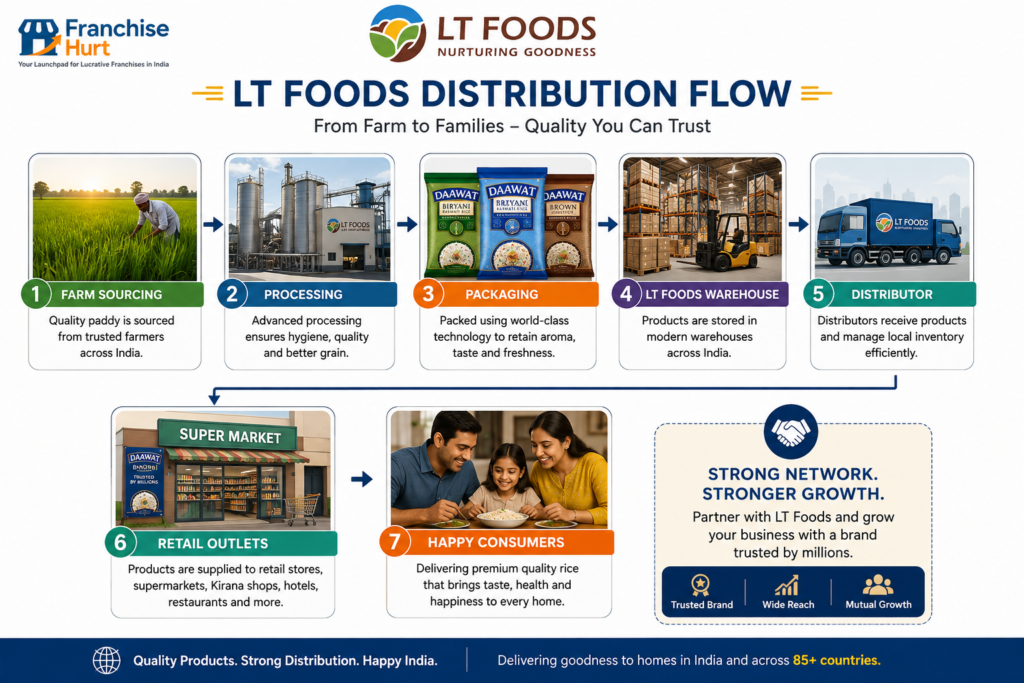
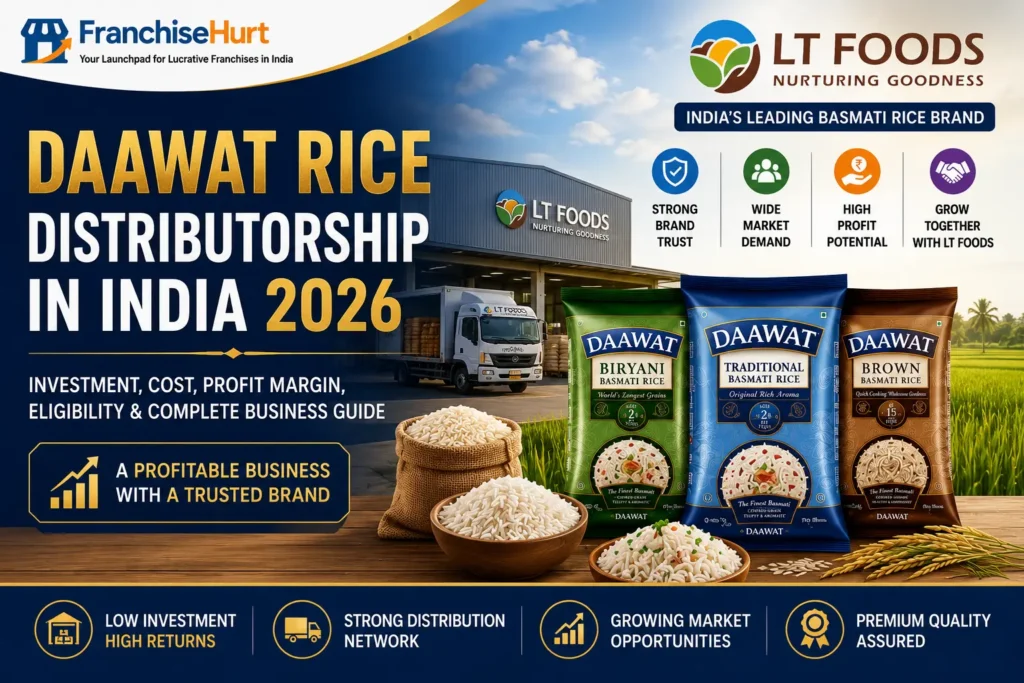
There are many rice brands in the market, so it’s natural to wonder why entrepreneurs choose Daawat. One reason is that the brand already has a strong presence in supermarkets, grocery stores, and wholesale markets across India. Retailers are more likely to stock products that customers already recognize and ask for.
Another reason is that rice is an everyday food item. Unlike seasonal products, it has demand throughout the year, which helps distributors receive regular orders from retailers.
Daawat also offers products in different price segments, allowing distributors to cater to a wide range of customers—from local grocery stores to premium supermarkets and hotels.
However, demand can vary from one region to another. Before investing, it’s a good idea to check how well the brand performs in your local market.
How Much Should You Budget?
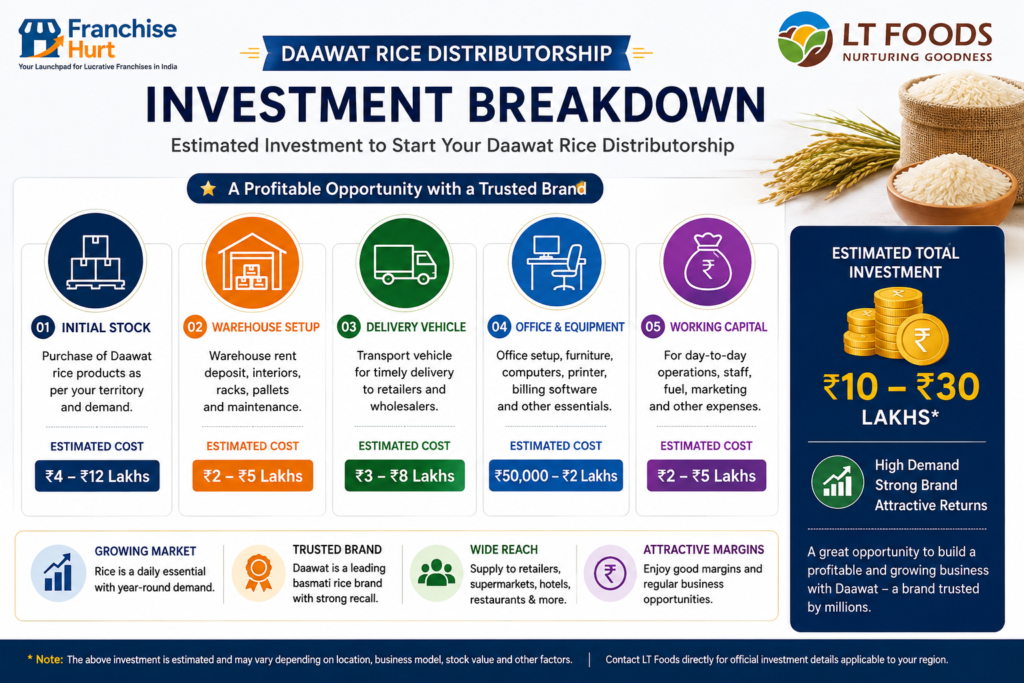
One of the biggest questions entrepreneurs have is the investment required to start a Daawat distributorship.
At the time of writing, LT Foods has not publicly disclosed a standard investment amount for appointing distributors. The total investment usually depends on factors such as the territory, expected sales volume, warehouse capacity, and existing business infrastructure.
If you’re already running an FMCG or grocery distribution business, your investment may be lower because you may already have storage space and delivery vehicles.
Estimated Investment
| Expense | Estimated Cost* |
|---|---|
| Initial Stock | ₹4 Lakhs – ₹12 Lakhs |
| Warehouse Setup | ₹2 Lakhs – ₹5 Lakhs |
| Delivery Vehicle | ₹3 Lakhs – ₹8 Lakhs |
| Office & Equipment | ₹50,000 – ₹2 Lakhs |
| Working Capital | ₹2 Lakhs – ₹5 Lakhs |
| Estimated Total Investment | ₹10 Lakhs – ₹30 Lakhs |
Note: These figures are estimates based on similar FMCG distribution businesses. Contact LT Foods directly for official investment details applicable to your region.
What Setup Will You Need?
A rice distributorship doesn’t require a large showroom, but it does require a well-organised storage and delivery system.
Most distributors generally have:
- A clean and dry warehouse
- A small office for billing and record keeping
- Delivery vehicles for supplying retailers
- Storage racks or pallets
- Computers with billing software
- Internet connection
Since rice is supplied in different pack sizes, proper storage is important to keep products safe from moisture and pests.
If you already distribute grocery or FMCG products, you may already have most of this infrastructure.
Also Read: Bindu Distributorship
Brands Owned by LT Foods
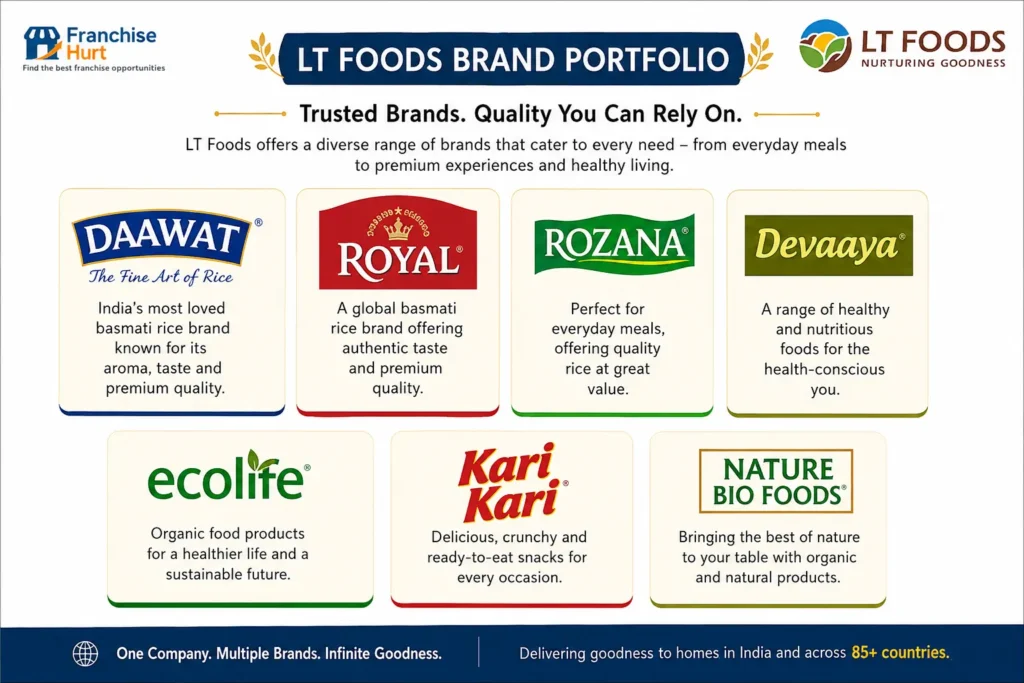
While Daawat is the company’s most recognised brand in India, LT Foods Limited has built a diverse portfolio that serves different customer segments across domestic and international markets. This allows the company to reach households, restaurants, hotels, and retail chains through a wide range of products.
Some of the well-known brands owned by LT Foods include:
Daawat
Daawat is the company’s flagship brand and is best known for its premium basmati rice. It offers a wide range of products, from everyday cooking rice to premium basmati varieties used in homes, restaurants, and hotels.
Royal®
Royal is a premium rice brand primarily available in international markets, especially North America. It is popular for its authentic basmati rice and ready-to-cook products.
Rozana
Rozana is designed for everyday cooking and offers affordable rice options for families looking for quality at a reasonable price.
Devaaya
Devaaya focuses on nutritious and healthier food choices, including specialty rice products that cater to health-conscious consumers.
Ecolife
Ecolife includes organic food products sourced using sustainable farming practices. The brand targets consumers looking for certified organic options.
Kari Kari
Kari Kari is LT Foods’ snack brand, offering a variety of ready-to-eat products. It reflects the company’s expansion beyond the rice category into packaged foods.
Nature Bio Foods
Nature Bio Foods is another brand within the LT Foods group that focuses on organic food products and exports to international markets.
Why Does This Matter for Distributors?
A strong brand portfolio can benefit distributors in several ways. It shows that the company operates across different product categories and customer segments instead of relying on a single product.
For distributors, this can mean:
- Better brand recognition in the market
- Opportunities to work with multiple product categories
- Wider customer reach across retail and wholesale channels
- Support from an established FMCG company with domestic and international operations
Although distributorship opportunities may focus on specific brands or product lines, understanding the company’s overall portfolio gives you a better picture of its business strength and market presence.
FranchiseHurt Tip: Before applying, ask the company which brands and product categories are available for distribution in your region. Distributor rights and product availability can vary depending on the territory.
Is This Business Right for You?
A Daawat distributorship may suit entrepreneurs who already understand how wholesale or FMCG distribution works.
It can be a good fit if you:
- Already supply grocery stores or supermarkets
- Have experience in food or FMCG distribution
- Can manage inventory efficiently
- Have sufficient working capital
- Want to expand your existing product range
If you’re completely new to distribution, spend some time understanding the business before making a significant investment. Managing inventory, deliveries, and retailer relationships is part of the day-to-day operation.
How Do Distributors Earn?
Distributors don’t earn simply by selling products. Their income depends on how efficiently they manage their business.
Some of the factors that influence earnings include:
- Number of retailers supplied
- Monthly sales volume
- Product demand in the assigned territory
- Operating expenses
- Inventory turnover
Restaurants, hotels, catering businesses, supermarkets, and wholesale stores can all become regular customers if the distributor provides reliable service and maintains product availability.
LT Foods has not publicly shared distributor profit margins, so it’s advisable to discuss commercial terms directly with the company during the application process.
Also Read: Artos Distributorship
Challenges to Keep in Mind
Every distribution business has its own challenges, and rice distribution is no different.
Competition
The rice market includes several established national and regional brands. Building strong relationships with retailers and ensuring timely deliveries can help you stay competitive.
Storage Management
Rice needs to be stored in a dry and hygienic environment. Poor storage conditions may affect product quality and lead to unnecessary losses.
Price Fluctuations
The prices of agricultural products can change due to crop production, procurement costs, and market conditions. Distributors should be prepared to manage inventory carefully during such periods.
Credit Management
Many retailers purchase goods on short-term credit. Managing collections and maintaining healthy cash flow is important for running the business smoothly.
FranchiseHurt Insight 💡
One thing we noticed while researching Daawat is that the brand serves multiple customer segments. Apart from households, its products are also widely used by restaurants, hotels, catering businesses, and modern retail chains.
For distributors, this means there may be opportunities to build a diverse customer base instead of depending on a single type of retailer. Before applying, it’s worth identifying which customer segment has the strongest demand in your local market.
How to Apply for a Daawat Distributorship
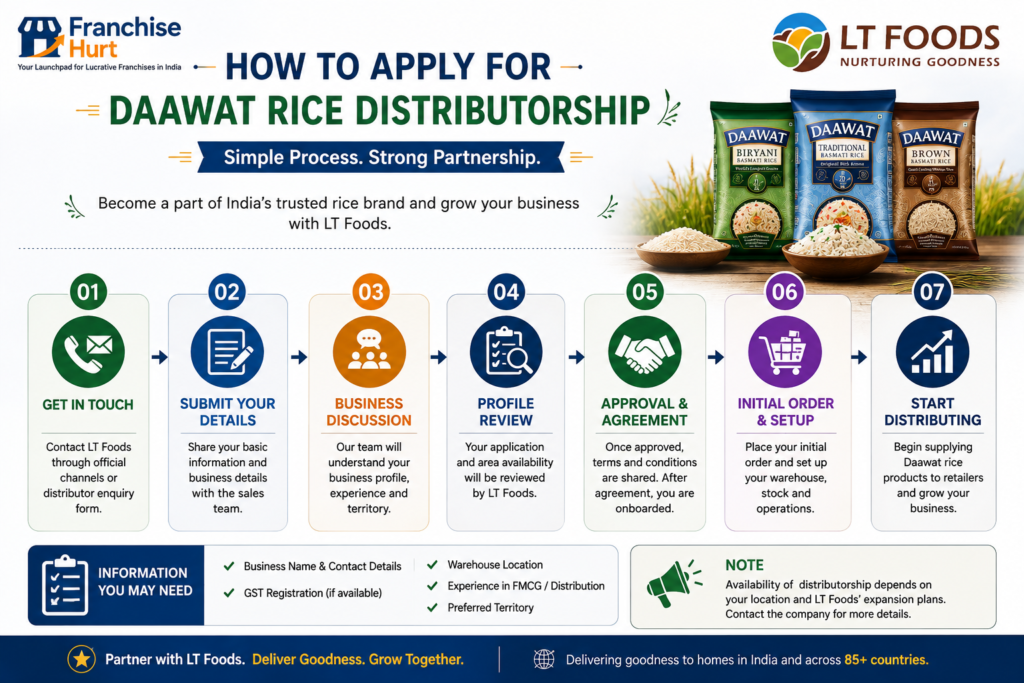
If you’re interested in becoming a Daawat distributor, the first step is to contact LT Foods Limited directly. At the time of writing, the company does not provide a dedicated online distributorship application form. Instead, business enquiries can be submitted through the official contact channels available on the LT Foods website.
When you contact the company, provide complete and accurate information about your business. This helps the sales team understand your profile and determine whether there are opportunities in your preferred location.
What Information Should You Keep Ready?
Before contacting the company, prepare a few basic business details. This can make the discussion smoother if the company requests additional information.
Generally, you should be ready with:
- Full Name
- Mobile Number
- Email Address
- Business Name
- Business Address
- GST Registration (if available)
- Existing Business Details
- Warehouse Location
- Preferred Distribution Area
If you already distribute grocery or FMCG products, mentioning your experience can help the company understand your business background.
🌾 Ready to Become a Daawat Distributor?
Contact LT Foods through their official business enquiry page to explore distributorship opportunities in your preferred location.
🚀 Apply on Official Website✔ Official LT Foods Contact Page
What Happens After You Apply?
The exact approval process may differ depending on the location and business requirements.
Typically, the company may review:
- Your business profile
- Distribution experience
- Warehouse facilities
- Market coverage
- Availability of distributors in your preferred area
If your application matches the company’s expansion plans, their team may contact you for further discussions.
Questions to Ask Before Investing
Before making any financial commitment, it’s worth having a clear discussion with the company. A few practical questions can help you understand the opportunity better.
You can ask:
- Is my preferred district or city available?
- What product range will I be handling?
- Is there a minimum order requirement?
- What payment terms are followed?
- Does the company provide marketing or promotional support?
- How frequently are products supplied?
- Who will be my point of contact after onboarding?
Getting these answers in advance can help you plan your business more confidently.
Should You Consider a Daawat Distributorship?
Daawat is a well-known rice brand with a long-standing presence in the Indian market. That brand recognition can make it easier to introduce products to retailers compared to lesser-known brands.
However, the success of a distributorship depends on more than the brand itself. Your local market, retailer network, customer demand, and day-to-day business management all play an important role.
If you already have experience in grocery or FMCG distribution, adding Daawat products to your portfolio could be a natural expansion. If you’re new to distribution, it’s worth understanding the business model before making a major investment.
FranchiseHurt Research Notes
During our research, we found that LT Foods provides detailed information about its brands, products, manufacturing capabilities, and corporate operations through its official website. However, the company does not publicly disclose standard distributor investment, security deposit, or profit margin details.
Since commercial terms may vary depending on the territory and business profile, it’s always advisable to discuss these details directly with the company’s sales team before making any investment.
Before You Decide
Before submitting your enquiry, spend some time understanding your local market.
Visit a few supermarkets, grocery stores, and wholesale shops in your area and observe:
- Which Daawat rice products are available?
- Which pack sizes are most popular?
- Are retailers regularly restocking the brand?
- Which competing brands have a stronger presence?
This small exercise can give you a better understanding of local demand and help you make a more informed decision.
Final Thoughts
A Daawat distributorship may be worth exploring if you’re looking to expand your FMCG or grocery distribution business with a recognised rice brand. The company has built a strong reputation over the years, and rice remains an essential household product with steady demand.
At the same time, every business requires careful planning. Before investing, compare similar rice brands, understand the commercial terms, and evaluate demand in your target market. Taking the time to research today can help you avoid costly mistakes later.
Explore FMCG dealership Opportunities
Frequently Asked Questions (FAQs)
1. Is Daawat offering distributorship opportunities?
Ans: Business enquiries can be made directly to LT Foods Limited through its official contact channels. Availability depends on the company’s expansion plans and your preferred location.
2. How much investment is required?
Ans: LT Foods has not publicly announced a fixed investment amount. The total investment depends on factors such as inventory, infrastructure, and the distribution area.
3. Does LT Foods disclose distributor profit margins?
Ans: No. Distributor margins and commercial terms are generally discussed during the business enquiry process and are not publicly available.
4. Can a new entrepreneur apply?
Ans: Yes. However, prior experience in FMCG, grocery, or wholesale distribution may be beneficial when applying.
5. What products can a distributor supply?
Ans: Depending on the business arrangement, distributors may handle Daawat basmati rice, everyday rice varieties, and other products offered by LT Foods.
6. How can I contact LT Foods?
Ans: You can contact the company through the official LT Foods Contact Us page for distributor or business-related enquiries.
7. Is warehouse space required?
Ans: Yes. A clean and well-maintained warehouse is generally needed to store rice products safely before supplying them to retailers.
8. Is this business suitable for small towns?
Ans: It depends on the demand in your area and whether the company is appointing distributors for that location. You should confirm territory availability before investing.
9. Can existing FMCG distributors add Daawat products?
Ans: Yes. Businesses that already supply grocery stores or supermarkets may find it easier to expand by adding Daawat products, provided the company approves the distributorship.
FranchiseHurt Disclaimer
The investment figures and business insights shared in this article are based on industry research and publicly available information. LT Foods Limited has not officially published standard distributorship investment, profit margin, or security deposit details. Before making any financial commitment, contact the company directly to verify the latest requirements, commercial terms, and territory availability.
This completes the blog in the FranchiseHurt editorial style—simple, conversational, practical, and focused on helping readers make informed business decisions without repeating the same points across sections.