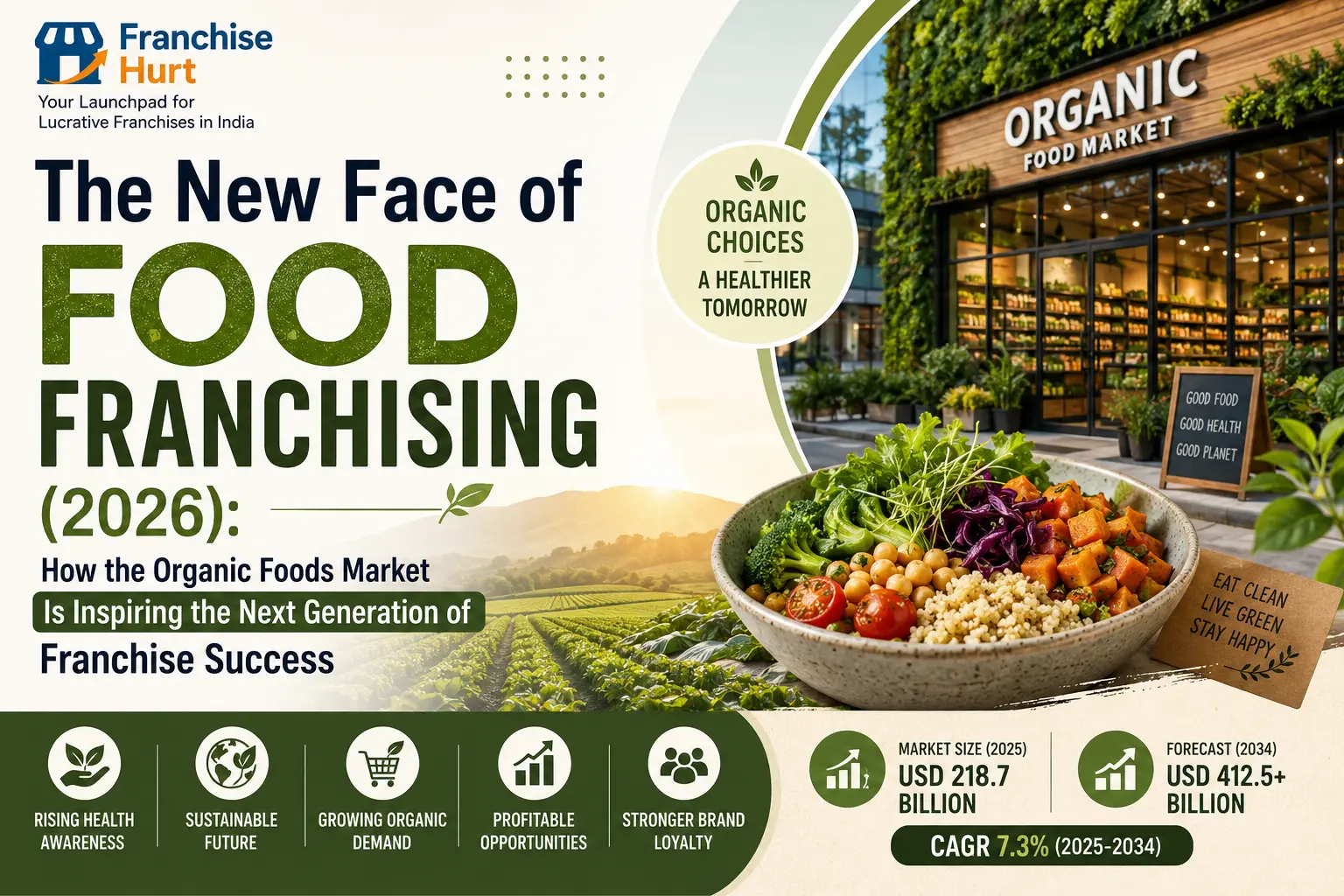
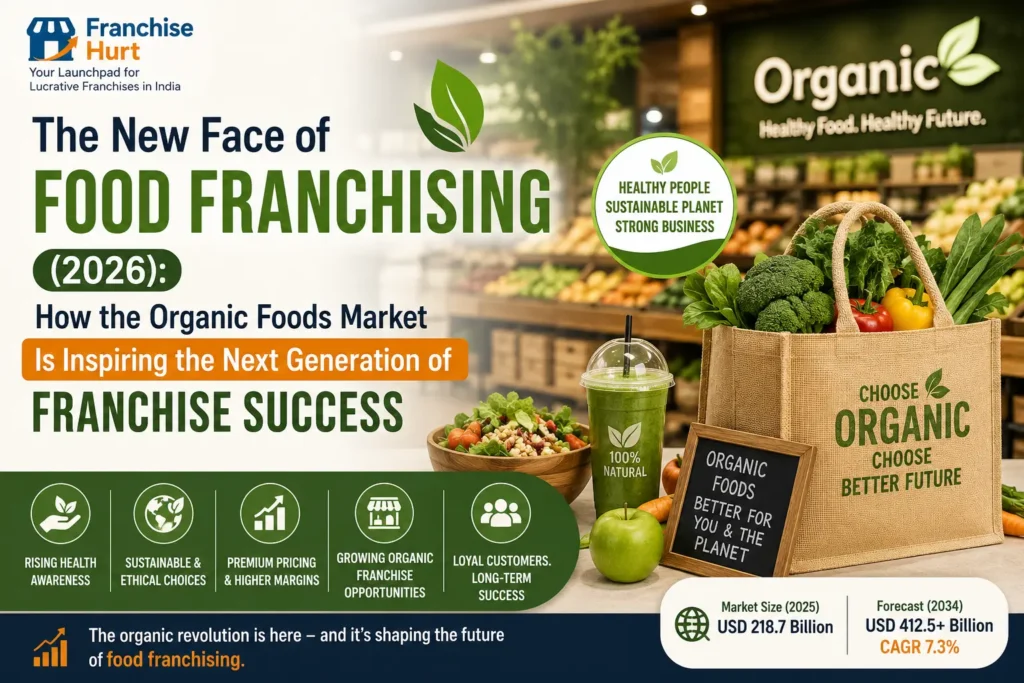
The New Face of Food Franchising(2026): How the Organic Foods Market Is Inspiring the Next Generation of Franchise Success
The age of fast and affordable is yielding to that of conscious choices, in the world of food franchise. While quality tastes and competitive pricing may continue to have a role to play, a new era of smart shopping has emerged. Customers have begun to delve deeper into the way their food is prepared and presented, seeking information on: Sourcing of ingredients The kind of farms from which they are procured How nutritive they are What is the impact on the planet.
Quick Overview
| Topic | Details |
|---|---|
| Industry | Organic Foods Market |
| Estimated Market Size (2025) | USD 218.7 Billion |
| Forecast Market Size (2034) | USD 412.5+ Billion |
| Expected CAGR | 7.3% |
| Key Drivers | Health Awareness, Sustainability, Clean Labels |
| Fastest Growing Channel | Online Retail & Direct-to-Consumer |
| Best Franchise Opportunities | Organic Cafes, Juice Bars, Grocery Stores, Healthy Restaurants |
| Article Type | Market Insights |
Table of Contents
Such a sentiment has not only elevated organic food to mainstream status but is also inspiring business entrepreneurs and food franchise brands to take a closer look at what and how they sell their goods. Organic food options today aren’t confined to select retail stores and have begun influencing: Cafes Qsr stores supermarkets meal preparation services bakeries juice bars and all health-conscious retail brands.
The new franchise entrepreneurs are seeing an increased willingness among customers to pay higher prices for organic food and products that conform to their increasingly conscious lifestyle and personal values.
Also Read: Tealogy Tea Cafe Franchise
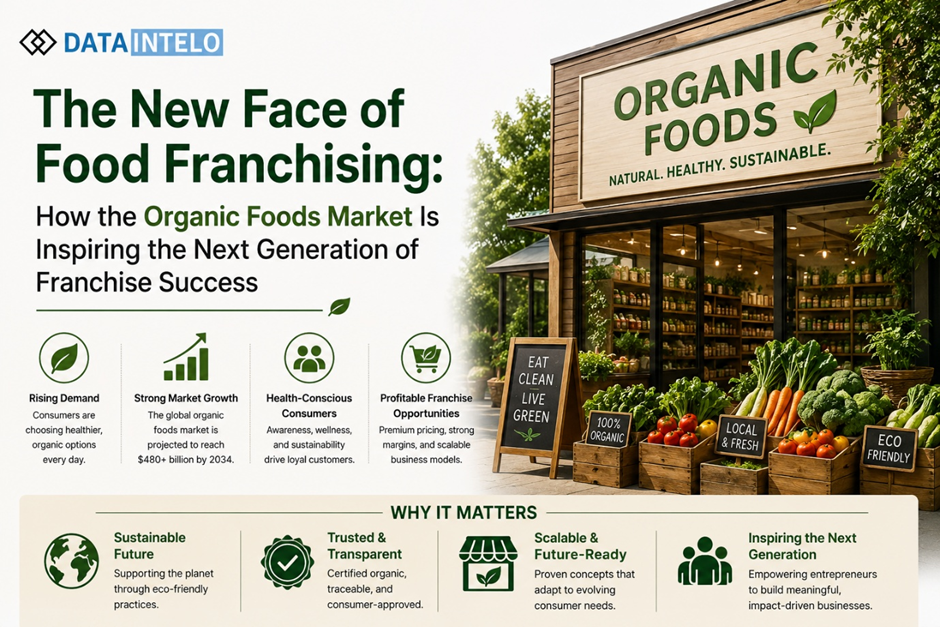
“The global Organic Foods Market was valued around $218.7 billion in 2025 and it is expected to reach more than $412.5 billion by 2034 growing at CAGR of nearly 7.3% over the forecast period”. As per DataIntelo’s analysis. These aren’t just sales growth figures; this is a tectonic shift in consumer purchasing that is altering the framework of how franchisors think about investment. Where past food trends are based on fleeting marketing ploys, organic growth has a deeper underpinning – a sustained increase in disposable incomes, the rise of preventative health trends, government policy favouring organic agriculture, and technology making transparency more readily available to the consumer.
Franchising leaders have a new opportunity to create profitable businesses that win consumer loyalty, as organic brands, from farms to table, tap into consumer consciousness as a means to future-proof investment dollars.
Key Highlights
✅ Organic food demand continues to grow globally.
✅ Consumers increasingly prefer healthy and sustainable products.
✅ Organic food franchises benefit from premium pricing.
✅ Digital transparency strengthens customer trust.
✅ Technology improves supply chain efficiency.
✅ Sustainability has become a competitive advantage.
✅ Millennials and Gen Z are driving market growth.
✅ Hybrid online and offline business models are expanding.
🚀 List Your Franchise with FranchiseHurt
Own a Franchise, Dealership, Distributorship, or Business Opportunity? Reach thousands of entrepreneurs actively looking for investment opportunities across India by listing your business on FranchiseHurt.
📢 List Your Franchise, Dealership & DistributorshipWhy Organic Foods Are Reshaping Food Franchising
consumer expectations have transformed in recent years. Back then, it was a food franchises fight to be quick, cheap, or easy to get. Now, today’s customer bases their brand decisions on ingredient choice, certification of sustainable practices, environmental responsibility, the nature of packaging materials, and production integrity.
Organic food franchises typically focus on:
- Certified organic ingredients
- Clean-label product formulations
- Sustainable sourcing practices
- Eco-friendly packaging
- Local supplier partnerships
- Reduced chemical inputs
- Ethical farming standards
This sets apart the brands from competitors in intense marketplaces and bolsters consumer loyalty. millennials and generation z – have played a major role in shifting this market dynamic. this group increasingly research products before buying and favor companies who make eco and socially conscious decisions.
They are a big part of why there is an increased interest in organic cafes, groceries, healthy snack shops, juice bars and farm to table restaurants. Businesses that highlight integrity, and transparency often hold onto their customers longer than businesses with the focus on deals and price alone. It can be seen as another important consideration for this segment. organic goods typically have a greater selling price on account of certifications, sustainable growing processes, and premium ingredients.
The price of goods may be greater than average, but franchisors typically receive higher profit margins when the premium placement is supplemented with the power of their brands.
Market Dynamics Supporting Franchise Expansion
Several interconnected forces continue driving the expansion of organic food franchises worldwide.
Growing Health Awareness
Nutrition and disease prevention, along with overall wellness are now part of consumer thinking. Heightened awareness of obesity, diabetes, cardiovascular disease, and the myriad lifestyle associated diseases has motivated shoppers to make smarter choices for food.
This behavioural shift has increased demand for:
- Organic fruits and vegetables
- Organic dairy products
- Organic cereals
- Organic beverages
- Organic bakery products
- Organic baby foods
- Organic ready-to-eat meals
There are several opportunities for developing new franchisable categories among retail and food service outlets.
Also Read: Kumbakonam Degree Coffee Franchise
Sustainability Is Becoming a Competitive Advantage
Being an environment friendly product is already a deciding purchasing factor
Consumers increasingly support businesses that reduce:
- Chemical pesticide usage
- Carbon emissions
- Plastic packaging
- Water waste
- Food waste
Making green choices in your business helps improve the image of your franchise and helps retain customers for years.
Research Insights
According to DataIntelo, the global Organic Foods Market was valued at approximately USD 218.7 billion in 2025 and is projected to exceed USD 412.5 billion by 2034, growing at a CAGR of 7.3%. Rising health awareness, sustainability initiatives, premium food consumption, and digital transparency continue to drive long-term growth across the organic food industry.
Reference: https://dataintelo.com/report/global-organic-foods-market
Digital Transparency Builds Consumer Confidence
Today’s technology brings greater visibility to organic food supply chain.
Many businesses now implement:
- QR-code product tracking
- Blockchain-enabled traceability
- Digital farm certifications
- Smart inventory systems
- AI-powered demand forecasting
They improve operating efficiencies for the franchisor and provide more certainty to the consumer on product legitimacy.
Also Read: Chai Masthi Franchise
Organic Foods Market at a Glance
| Market Indicator | Value |
| Estimated Market Size (2025) | USD 218.7 Billion |
| Forecast Market Size (2034) | USD 412.5 + Billion |
| Expected CAGR | 7.3% |
| Fastest-Growing Sales Channel | Online Retail & Direct-to-Consumer |
| Leading Product Categories | Fruits & Vegetables, Dairy, Beverages, Snacks |
| Major Consumer Drivers | Health Awareness, Sustainability, Clean Labels |
The Economics Behind Organic Food Franchises
Beyond rising demand, a primary driver for the financial strength of organic food franchises is increased revenue stability. Customers who buy organic are more loyal and have a higher likelihood of repeat purchases. Higher average transaction sizes is also a key element of attractive franchise economics.
Explore Other Food and Beverages Franchises
Organic certified goods, in general, command higher prices than conventionally grown alternatives, especially with full traceability and quality standards. Franchises are also leveraging technology to improve the economics through efficient inventory, forecasting, and supply chain management, minimizing waste while keeping products fresh. And many are embracing hybrid models to serve a broader audience: opening a physical location that’s integrated with a web store, subscription services and delivery options.
As digital trade grows, franchise systems that integrate technology with their sustainable fare will become even more competitive in the burgeoning organic market.
Reference: https://dataintelo.com/report/global-organic-foods-market
Frequently Asked Questions (FAQs)
1. What is the Organic Foods Market?
Ans: The Organic Foods Market includes food products produced using certified organic farming methods with minimal chemical inputs and sustainable practices.
2. How large is the Organic Foods Market?
Ans: According to DataIntelo, the market was valued at approximately USD 218.7 billion in 2025 and is projected to exceed USD 412.5 billion by 2034.
3. Why are organic food franchises becoming popular?
Ans: Growing health awareness, sustainability concerns, and consumer preference for clean-label products are increasing demand for organic food franchises.
4. Which businesses benefit most from organic food trends?
Ans: Organic cafés, grocery stores, juice bars, bakeries, supermarkets, and healthy restaurants are among the major beneficiaries.
5. What technologies support organic food franchises?
Ans: QR-code tracking, blockchain traceability, AI-powered forecasting, smart inventory systems, and digital certifications improve transparency and operational efficiency.
🚀 About FranchiseHurt
Your Trusted Franchise Discovery Platform
FranchiseHurt is dedicated to helping entrepreneurs discover trusted franchise, dealership, distributorship, and business opportunities across India. Our expert-written guides combine official company information with independent market research and industry insights to help readers make confident and informed investment decisions.